

Workplace Hygiene That Protects Your Business
A visitor notices the smudged glass door, full trash can, or stained lobby carpet before they hear your receptionist’s welcome. Employees notice those details too. Workplace hygiene is not simply about making a facility look presentable - it is a daily standard that supports employee confidence, customer trust, and a more orderly operation.
For office managers, property managers, and business owners, the challenge is consistency. A quick cleaning before a client visit may improve appearances for an hour, but a dependable hygiene program keeps high-traffic spaces, shared surfaces, restrooms, and floors under control all week long.
What Workplace Hygiene Means for Commercial Facilities
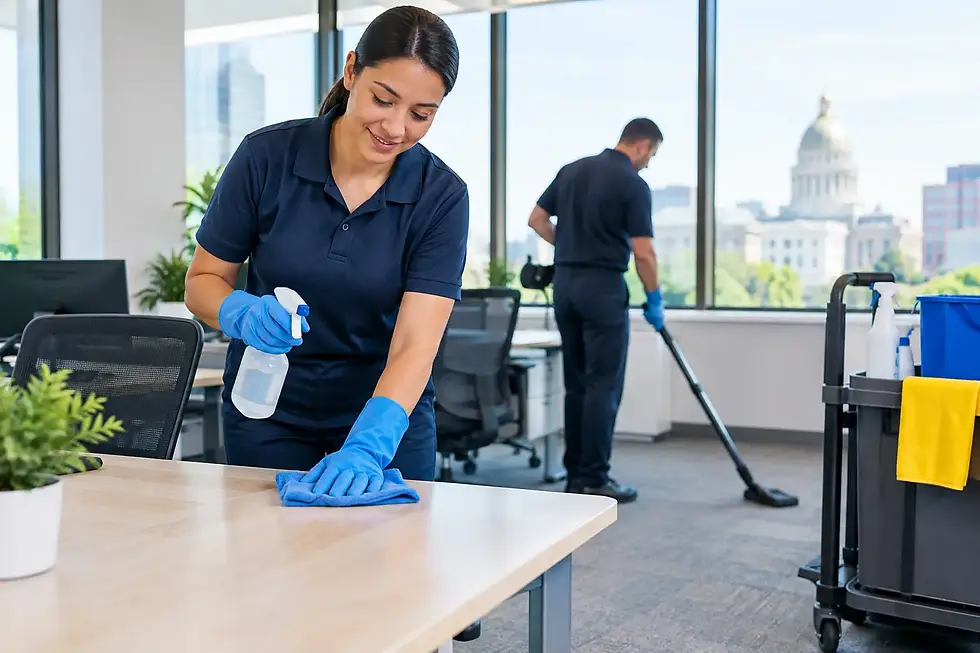
Workplace hygiene is the routine of keeping a business environment clean, sanitary, and ready for the people who use it. It combines visible cleaning, such as vacuuming, dusting, emptying waste bins, and cleaning glass, with the less visible work that matters just as much: disinfecting touchpoints, maintaining restrooms, addressing spills quickly, and removing buildup from floors and carpets.
The right standard depends on the facility. A medical office, childcare center, restaurant, warehouse, and traditional office all have different traffic patterns and cleaning priorities. Still, every commercial space needs a plan that protects the areas people see, touch, and depend on.
A reliable plan also recognizes the difference between cleaning and disinfecting. Cleaning removes soil, dust, and debris from surfaces. Disinfecting is a targeted step used on appropriate high-touch areas after cleaning. Both have a role, but neither replaces the other.
Why Poor Hygiene Becomes a Business Problem
When cleaning is inconsistent, the problem rarely stays limited to appearances. Restrooms run short on supplies. Break rooms collect crumbs and spills. Door handles and shared equipment go too long without attention. Floor finishes dull, carpets retain soil, and small maintenance issues become larger, more expensive projects.
Employees may see poor conditions as a sign that their workplace is not being managed with care. Clients, tenants, and visitors can reach the same conclusion within minutes. For customer-facing businesses, that first impression can affect whether someone feels comfortable returning or doing business with you.
There is also an operational cost. A cluttered or poorly maintained environment takes staff away from their actual responsibilities. When employees are regularly restocking restroom paper, cleaning up common areas, or reporting the same missed details, internal time is being spent on work that a professional janitorial program should handle.
Focus on the Spaces That Carry the Most Risk
Not every square foot needs the same attention every day. A smart workplace hygiene plan prioritizes traffic, touch frequency, and how visible each area is to employees and guests.
Entrances, lobbies, reception desks, elevators, and hallways create the first impression. They need clean glass, debris-free floors, orderly mats, and prompt attention to weather-related messes. In Albany winters, salt, slush, and moisture can quickly damage floors and create slip hazards if they are not managed consistently.
Restrooms require a more detailed standard. Clean fixtures matter, but so do stocked soap dispensers, paper products, odor control, clean mirrors, and dry floors. A restroom that appears neglected can undermine confidence in the cleanliness of the entire property.
Break rooms and kitchens deserve regular attention because food residue, shared appliances, and overflowing waste can build up quickly. Wiping counters is not enough if microwave handles, refrigerator pulls, tables, sinks, and trash areas are missed.
High-touch surfaces should be included in routine service based on activity in the building. Think door handles, light switches, handrails, shared phones, copier controls, conference tables, and elevator buttons. The goal is not to treat every surface identically. It is to clean the areas people repeatedly contact on a schedule that reflects real use.
Build a Schedule That Matches Your Facility
The best cleaning schedule is not always the most frequent one. It is the one that matches your building’s use, budget, and expectations without leaving gaps that employees or visitors notice.
A small professional office with limited daily traffic may only need recurring service a few nights each week, along with periodic carpet care and window cleaning. A busy multi-tenant property, retail location, school, or healthcare-related facility may require daily service, day porter support, or more frequent restroom checks.
Start by identifying which tasks must happen daily, which can happen weekly, and which need periodic deep cleaning. Daily needs often include waste removal, restroom cleaning, touchpoint cleaning, and attention to entrances. Weekly work may include more detailed dusting, edge vacuuming, and break room cleaning. Monthly or seasonal service can address carpet extraction, floor maintenance, high dusting, interior glass, and areas that routine cleaning does not fully restore.
Flexible scheduling matters as much as the checklist. Cleaning after hours prevents disruption for many offices, while daytime support may be necessary for facilities with constant public traffic. A professional provider should be able to adjust service around your operations rather than forcing your team to work around the cleaning crew.
Make Responsibilities Clear Without Micromanaging
A cleaning provider cannot solve every hygiene issue alone. Employees also play a role in keeping shared spaces usable between service visits. The key is setting reasonable expectations without making staff feel responsible for janitorial work.
Employees should know where to report spills, supply shortages, overflowing bins, and building concerns. They should also understand basic shared-space expectations, such as labeling food in communal refrigerators or clearing personal items from conference rooms after meetings. Management, in turn, should provide a simple reporting path and make sure concerns are acted on promptly.
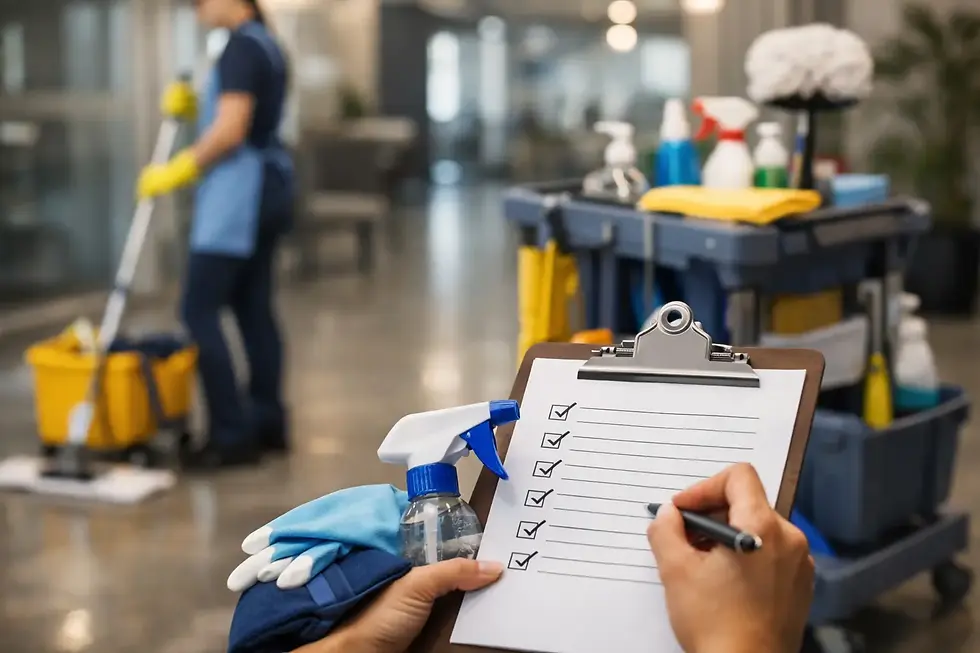
For the cleaning team, clarity comes from a site-specific scope of work. Generic checklists can miss the details that matter at your property, such as a frequently used side entrance, a customer restroom near the lobby, specialty flooring, or a conference room used for daily client meetings. Clear standards make inspections easier and reduce the frustration of repeatedly explaining what was missed.
Do Not Let Floors and Carpets Become an Afterthought
Floors take more abuse than almost any other surface in a commercial building. They collect water, salt, grit, food debris, and tracked-in soil every day. Routine vacuuming and mopping are necessary, but they will not always protect the appearance or life of the material.
Carpet needs periodic professional cleaning to remove embedded soil that ordinary vacuuming cannot reach. Hard floors may need machine scrubbing, buffing, or strip-and-wax service depending on the material and level of wear. Waiting until floors look visibly damaged can make restoration more difficult and more costly.
There is a practical trade-off here. More intensive floor service may require scheduling around foot traffic and drying time. However, planned maintenance is usually far less disruptive than responding to a stained carpet before a major meeting or replacing a neglected floor finish ahead of schedule.
Review Results, Not Just Service Dates
A cleaning schedule on paper does not guarantee a clean facility. Facility leaders should periodically walk the space with fresh eyes. Check entrances at opening time, restrooms during peak use, break rooms after lunch, and floors in high-traffic areas. These observations reveal whether service levels still match the building’s needs.
Look for patterns instead of isolated issues. One missed trash can may be a simple oversight. Repeated odor concerns, dusty corners, empty dispensers, or dull floors point to a scope, staffing, supply, or communication problem that needs correction.
A dependable commercial cleaning partner should welcome feedback and respond with practical solutions. That may mean changing the frequency of a task, adding a deeper service, revising a checklist, or assigning additional attention to a problem area. Unique Shine approaches commercial cleaning with that level of accountability, providing trained, insured, and bonded support tailored to each facility’s needs.
A Cleaner Facility Starts With a Clear Standard
Workplace hygiene works best when it is treated as an ongoing operating standard, not a last-minute response to a complaint or upcoming visit. Define what clean looks like in your facility, schedule service around actual use, and address small issues before they become visible problems.
When your building is consistently clean, stocked, and cared for, employees can focus on their work and visitors can focus on why they came. That is the kind of everyday result a professional cleaning plan should deliver.

Comments