
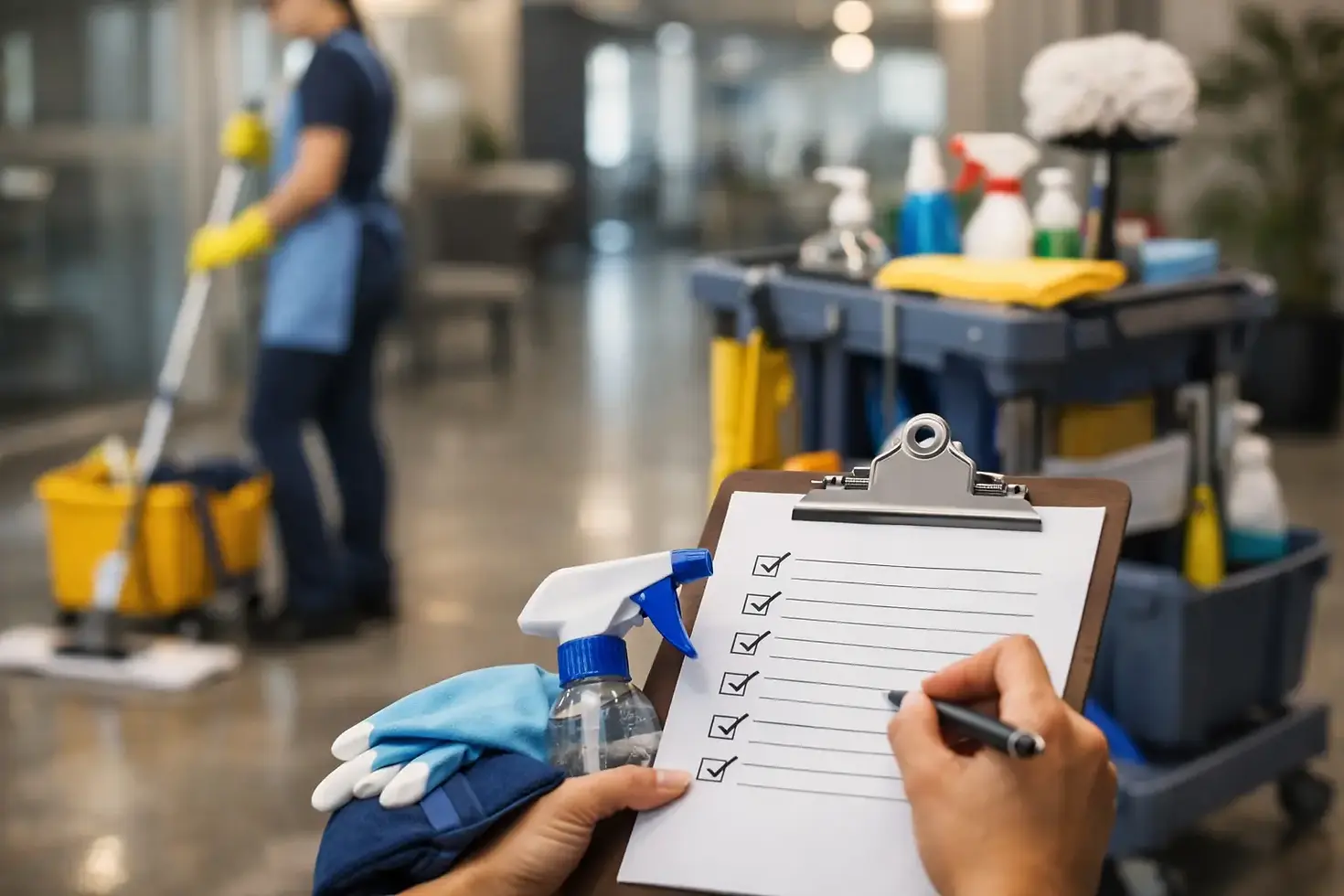
Commercial Cleaning Scope Checklist for Facilities
A cleaning proposal can look complete and still leave out the details that affect your facility every day: the restroom dispenser that stays empty, the lobby glass that is never touched, or the floor corners that collect debris between visits. A clear commercial cleaning scope checklist prevents those gaps before service begins. It gives facility managers, property managers, and business owners a practical way to define expectations, compare estimates fairly, and hold a cleaning partner accountable.
For Albany-area businesses, the right scope is rarely a one-size-fits-all document. A medical office has different sanitation priorities than a warehouse, school, dealership, apartment common area, or corporate office. The goal is not to request every possible task. It is to build a cleaning plan that protects your people, presents your business well, and fits how your facility actually operates.
Start With the Facility Details
A strong scope begins with the information that determines labor, supplies, scheduling, and safety requirements. Before requesting an estimate, document the square footage, number of floors, number of restrooms, break rooms, entrances, offices, conference rooms, and any high-traffic common areas. Include the number of employees or occupants, especially if the facility has peak shifts that create more restroom and break-room use.
Also identify the surfaces that need specialized care. Carpet, vinyl composition tile, luxury vinyl, ceramic tile, concrete, hardwood, and natural stone do not follow the same maintenance plan. A basic nightly mop may be appropriate for one floor, while another needs periodic machine scrubbing, strip-and-wax service, or carpet extraction to maintain its appearance and lifespan.
Be specific about access. Note whether cleaners need keys, badges, alarm codes, loading-dock access, elevator access, or approval to enter restricted areas. If cleaning must happen after business hours, state the acceptable service window and any noise limits. These details help prevent missed service and avoid disruption to employees, tenants, patients, or customers.
Define Cleaning Frequencies by Area
The most common scope mistake is assigning one frequency to an entire building. Facilities do not get dirty evenly. Entryways, restrooms, kitchens, reception areas, and break rooms usually need attention more often than private offices, storage rooms, or low-use conference spaces.
Your checklist should separate daily, weekly, monthly, quarterly, and as-needed work. Daily service may include trash removal, restroom cleaning, vacuuming, mopping, wiping high-touch surfaces, and restocking consumables. Weekly work often covers more detailed dusting, interior glass, baseboards in visible areas, and spot cleaning of walls or doors. Monthly or periodic tasks can include high dusting, vent cleaning, machine floor care, carpet cleaning, upholstery cleaning, and window cleaning.
Frequency should reflect traffic, not assumptions. A three-times-per-week cleaning schedule can work well for a small professional office with limited visitors. It may not be enough for a busy medical practice, shared workspace, fitness center, school, or multi-tenant commercial property. If your building has seasonal changes in traffic, ask for a scope that can be adjusted without starting over.
Include These Core Cleaning Areas
A useful commercial cleaning scope checklist names the areas to be cleaned and states what “clean” means in each one. General phrases such as “clean restrooms” or “maintain floors” leave too much room for interpretation.
For most commercial facilities, the checklist should address these core areas:
Entrances, lobbies, and reception areas: Vacuum or sweep floors, mop hard surfaces, clean entry glass, remove fingerprints from doors, straighten visible areas, and remove trash.
Restrooms: Clean and disinfect fixtures, partitions, sinks, faucets, mirrors, dispensers, floors, and touchpoints. Restock paper products, soap, and other agreed supplies.
Offices and workspaces: Empty wastebaskets, vacuum or mop floors, dust accessible horizontal surfaces, and spot-clean doors, glass, and high-touch areas.
Break rooms and kitchens: Clean tables, counters, sinks, appliance exteriors, cabinet fronts, floors, and trash areas. Clarify whether dishwashing, refrigerator cleaning, or microwave interior cleaning is included.
Conference rooms and common areas: Clean tables, chairs as needed, glass, floors, touchpoints, and waste receptacles.
Floors throughout the facility: Specify vacuuming, sweeping, mopping, spot treatment, machine scrubbing, carpet spotting, and periodic restorative floor care.
If your operation includes warehouses, production spaces, classrooms, locker rooms, showrooms, or patient areas, list them separately. They may require distinct products, procedures, equipment, or cleaning times.
Set Clear Standards for Restrooms and High-Touch Surfaces
Restrooms are often the quickest indicator of whether janitorial service is meeting expectations. Your scope should state that fixtures are cleaned and disinfected, floors are free of visible soil, mirrors are streak-free, odors are addressed, and dispensers are stocked. If supplies are provided by the cleaning company, define the products, dispenser types, reorder process, and who approves supply changes.
High-touch surface cleaning should be equally clear. Door handles, push plates, elevator buttons, light switches, shared equipment, counters, railings, and reception surfaces may need routine disinfecting. The exact approach depends on your facility type and current needs. Disinfecting is not automatically necessary for every surface during every visit, but it should be included where occupancy, health concerns, or customer contact make it appropriate.
Avoid vague language such as “sanitize as needed” unless you have agreed on what triggers that service. Clear standards make inspections easier and prevent confusion when conditions change.
Clarify What Is Included and Excluded
A reliable scope protects both the client and the cleaning provider by setting boundaries. Specialized tasks can be added, but they should not be assumed to be part of routine janitorial service.
Common add-on or periodic services include carpet extraction, window cleaning, deep cleaning, post-construction cleanup, upholstery cleaning, pressure washing, strip-and-wax floor service, and high dusting. Biohazard cleanup, hazardous material handling, exterior grounds work, pest control, and personal-item organization generally require separate arrangements.
This does not mean your provider cannot handle those needs. It means the work should be quoted, scheduled, and staffed correctly. A partner with broad commercial cleaning capabilities can make this easier by coordinating routine maintenance and specialty services under one accountable team.
Build Inspection and Communication Into the Scope
Cleaning quality is not just about the task list. It depends on how issues are reported, inspected, corrected, and documented. Include the name or role of the person who will communicate with the cleaning provider, along with the preferred method for routine requests and urgent issues.
Define how quality checks will work. Some facilities benefit from a monthly walkthrough with the account manager. Others need a site log, digital checklist, photo documentation for specific services, or supervisor inspections. The right system depends on the size of the property and how visible cleaning results are to tenants, visitors, or regulators.
Ask what happens when a task is missed or a concern is reported. A dependable commercial cleaning company should provide a direct contact, a reasonable response time, and a correction process. This is where bonded and insured operations, trained cleaners, and consistent supervision matter. The lowest estimate is not always the best value if service problems take days to resolve or become your staff’s responsibility.
Address Safety, Security, and Products
Your checklist should confirm who is responsible for cleaning supplies, equipment, safety data sheets, and staff training. If your facility has requirements for green products, fragrance-free products, hospital-grade disinfectants, or specific floor-care chemicals, put them in writing.
Security is equally important. Ask how cleaners are screened, whether the company is insured and bonded, and how keys, access cards, and alarm procedures are handled. For facilities open around the clock or operating multiple shifts, verify that the provider can support the required schedule without cutting corners.
Consider safety conditions unique to your site. Wet-floor signage, slip prevention, equipment storage, ladder use, restricted areas, and after-hours emergency contacts should all be addressed before the first service date.
Use the Checklist to Compare Cleaning Proposals
When two cleaning estimates look far apart, the difference is often in the scope rather than the rate. One proposal may include restroom restocking, detail dusting, interior glass, floor machine work, or quality inspections while another does not. Comparing only the monthly price can lead to disappointing results.
Give each prospective provider the same checklist and ask them to identify any assumptions, exclusions, or recommended changes. Their response can tell you a great deal. A professional partner will ask thoughtful questions about traffic, floor types, access, and priorities instead of offering a generic number without seeing the full picture.
Unique Shine works with commercial clients who need recurring janitorial service as well as specialized cleaning support, from deep cleaning and disinfecting to carpet care and strip-and-wax floors. The most effective service plans begin with a walkthrough and an honest conversation about what your facility needs now, what can be scheduled periodically, and what should be ready when an unexpected need arises.
A good scope should make your expectations easy to see on paper and even easier to see when you walk through the building. Start with the areas that affect safety, sanitation, and first impressions most, then choose a cleaning partner that is ready to deliver consistent results and respond when your facility needs more.


Comments