

What Is a Commercial Cleaning Company and Its Role?
A clean workplace affects more than appearances. It shapes first impressions for visitors, supports employee comfort, and helps facility managers stay ahead of sanitation issues before they become complaints. So, what is a commercial cleaning company? It is a professional service provider that cleans, maintains, and sanitizes business facilities on a recurring or as-needed basis.
Unlike a basic one-time cleaning service, a commercial cleaning company is built to support the daily realities of offices, medical spaces, retail locations, schools, apartment common areas, warehouses, and other professional environments. The work is scheduled around business operations, performed by trained cleaners, and tailored to the building's traffic, layout, and cleaning priorities.
What Is a Commercial Cleaning Company Responsible For?
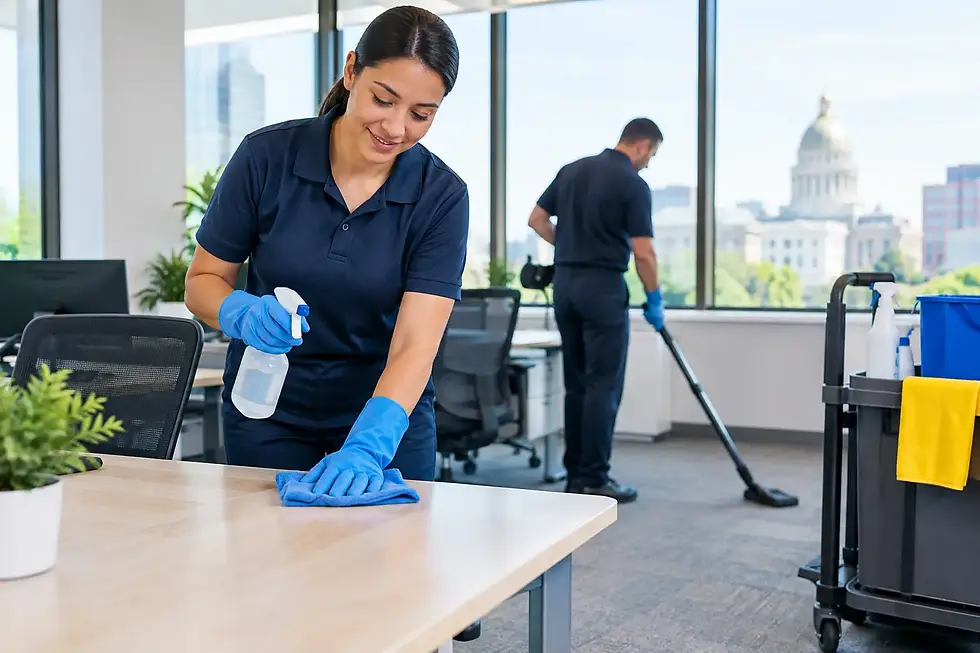
A commercial cleaning company helps businesses maintain a clean, safe, and presentable facility without putting cleaning management on internal staff. The provider may handle routine janitorial work after hours, respond to a spill or urgent sanitation concern, and perform specialized services that require the right equipment and products.
The exact responsibilities depend on the service agreement. A small Albany office may need nightly trash removal, restroom cleaning, vacuuming, and touchpoint disinfection. A multi-tenant property may need common-area cleaning, floor care, window cleaning, and a dependable crew that can adjust service when occupancy changes. A post-construction site has entirely different needs, including dust removal, debris cleanup, and detailed finishing before the space opens.
A capable provider does not treat every building the same. It begins by identifying the areas that receive the most use, the surfaces that need special care, the hours when cleaning can happen, and the standard the client expects. That planning is what turns cleaning from a recurring task into a managed facility service.
Commercial Cleaning vs. Residential Cleaning
The difference is not simply the size of the building. Commercial cleaning is designed around business environments, where cleaning quality, access control, scheduling, safety, and consistency all matter.
Residential cleaners generally work in private homes during the day and focus on household cleaning tasks. Commercial cleaners work in settings with more people, more varied surfaces, stricter expectations, and often limited access windows. They may clean after office hours, work around customers, follow site-specific procedures, or service multiple areas in one property.
Commercial work also often requires a higher level of accountability. Business clients should look for a company that is insured and bonded, uses trained cleaning professionals, and has a clear process for communication and quality checks. If a cleaning crew has access to keys, alarm instructions, confidential work areas, or valuable equipment, trust is not optional.
Services a Commercial Cleaning Company May Provide
Most commercial cleaning companies offer a mix of recurring maintenance and specialized services. The right scope depends on your building, budget, foot traffic, and industry requirements.
Common services include:
Recurring janitorial cleaning for offices, restrooms, break rooms, lobbies, and common areas
Disinfecting and high-touch surface cleaning for healthier shared spaces
Floor care, including carpet cleaning, tile and grout cleaning, and strip-and-wax services
Interior and exterior window cleaning where access and conditions allow
Deep cleaning for neglected areas, seasonal resets, moves, or special events
Post-construction cleanup to prepare renovated or newly built spaces for occupancy
Not every facility needs every service each week. Carpet extraction may be scheduled quarterly or as needed, while restroom cleaning and trash removal may be needed daily. Hard floors can look acceptable with routine mopping for a while, but eventually need machine scrubbing, refinishing, or waxing to protect their appearance and lifespan.
This is why a customized plan is usually more valuable than a generic package. Paying for daily floor work in a lightly used office may not make sense. On the other hand, reducing service too far in a busy medical office, retail store, or multi-tenant building can lead to visible dirt, odors, and more expensive restoration work later.
How Commercial Cleaning Services Work
A dependable commercial cleaning relationship usually starts with a walkthrough or detailed estimate. The provider assesses the square footage, number of restrooms, floor types, traffic patterns, building access, and the cleaning tasks that matter most to your team.
From there, the company develops a service schedule. This might be five nights per week for a busy office, three visits per week for a smaller professional suite, or a monthly deep-cleaning schedule for a low-traffic location. Cleaning can often be arranged before opening, after closing, overnight, or during lower-traffic hours to limit disruption.
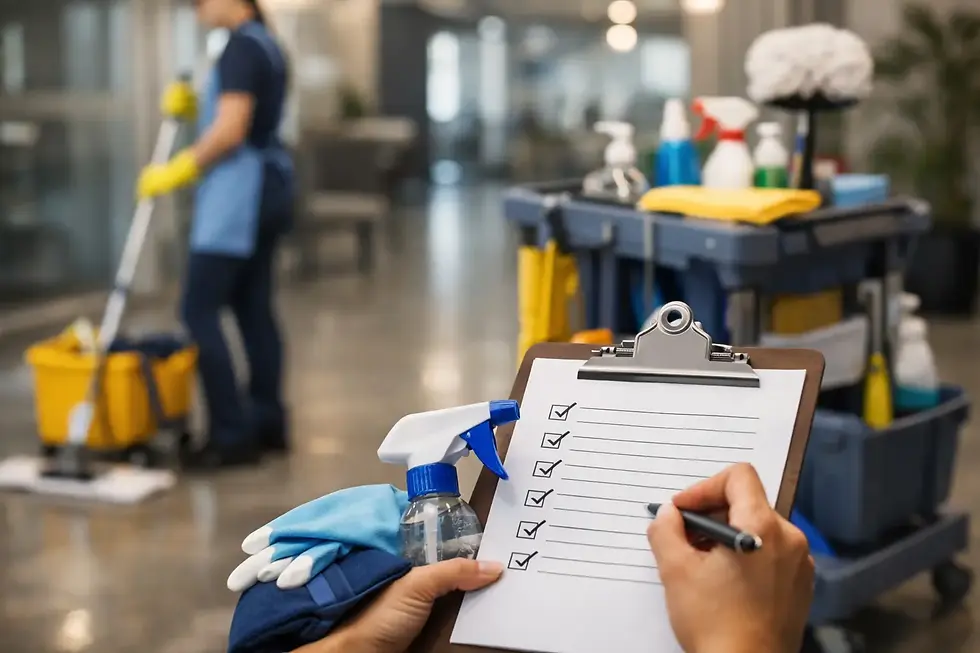
The best arrangements also establish clear expectations. Clients should know what gets cleaned at each visit, what services are billed separately, who to contact with requests, and how the provider handles missed details. A checklist is useful, but it should not replace communication. Facilities change. A conference room may become a high-use workspace, a construction project may create extra dust, or seasonal weather may increase floor and entryway cleaning needs.
At Unique Shine, commercial clients can request cleaning support that ranges from routine janitorial maintenance to specialized floor, carpet, window, disinfecting, and post-construction services. That breadth matters when a building needs more than a quick nightly reset.
Why Businesses Hire a Professional Cleaning Company
The most obvious reason is time. Office managers and property managers have more urgent responsibilities than checking whether restroom supplies are stocked or whether fingerprints are building up on a glass entry door. Outsourcing cleaning gives staff a reliable point of contact and a defined standard for the facility.
Professional service also helps create consistency. When cleaning is handled informally or assigned to employees who already have full workloads, details often get missed. Restrooms may receive attention while corners, baseboards, high-touch surfaces, and floors are overlooked. Over time, those missed details become visible to employees, tenants, and customers.
There is also a safety and reputation factor. Clean floors can reduce slip concerns when properly maintained. Clean restrooms signal care. A fresh, orderly reception area tells visitors that the business values professionalism. For healthcare-adjacent settings, schools, gyms, and shared offices, regular disinfecting can support a stronger sanitation routine alongside the facility's own policies.
What to Look for Before You Hire
Price matters, but the cheapest quote is not always the best value. A low rate may reflect a limited scope, rushed visits, inconsistent staffing, or a lack of supervision. Before choosing a commercial cleaning company, make sure you understand exactly what is included and how quality will be managed.
Ask whether the company is insured and bonded, whether cleaners are trained for your type of facility, and whether it can work within your required schedule. Ask how concerns are reported and resolved. A provider should be able to explain its process directly, not offer vague promises of a clean building.
It is also smart to consider service range. If you hire one company for nightly cleaning and need a separate vendor every time carpets need cleaning or floors need refinishing, coordination becomes more difficult. A full-service provider can simplify planning, especially for property managers and growing businesses with changing needs.
Still, broader service is only valuable when the company performs each service well. Ask about the equipment, products, and procedures used for specialty work. Strip-and-wax floor service, for example, requires more expertise than basic mopping. Window cleaning may require different access planning than routine interior cleaning. The right company will explain the scope honestly and recommend service based on the condition of your facility rather than pushing unnecessary add-ons.
When to Change Your Cleaning Plan
Your current schedule may need attention if employees are mentioning odors, restrooms are inconsistent, floors look dull shortly after cleaning, or visitors notice dust and clutter in common areas. These are not always signs that the cleaners are doing poor work. Sometimes the scope no longer matches the building's use.
A growing team, more customer traffic, a new tenant, seasonal weather, or a renovation can all change cleaning needs. Review the plan when operations shift instead of waiting for cleanliness problems to affect morale or your business image.
A commercial cleaning company should make that review easier. The right partner listens, adapts the schedule when needed, and gives you confidence that your facility will be ready when employees, customers, and tenants walk through the door.

Comments