

Top Cleaning Priorities Property Managers Need
A clean property is not simply a nicer place to work, shop, or visit. It affects tenant confidence, safety, lease renewals, staff productivity, and the daily perception of your management team. The top cleaning priorities property managers face should focus on the areas occupants notice first, the surfaces that carry the greatest sanitation risk, and the maintenance tasks that protect the building over time.
For commercial properties in Albany and surrounding areas, the right priorities can vary by building type, tenant traffic, season, and operating hours. A medical office has different needs than a professional office building or retail center. Still, a dependable cleaning plan starts with the same goal: keep every shared space clean, safe, and ready for the people who rely on it.
Top Cleaning Priorities for Property Managers
Keep entrances and common areas presentation-ready
Lobbies, entry doors, elevators, hallways, stairwells, and reception areas establish the first impression of a property. These spaces collect dirt, salt, leaves, moisture, fingerprints, and litter faster than many managers expect, especially during Albany's wet and snowy months.
Daily attention to entry glass, door handles, floor mats, visible debris, and high-touch surfaces helps keep small issues from becoming obvious problems. Floor mats should be vacuumed or cleaned regularly and replaced when they no longer trap moisture effectively. Wet floors near entrances are not just unsightly. They create a slip-and-fall risk that can affect tenants and visitors.
Common-area cleaning should also include corners, baseboards, elevator tracks, light switches, and other details that can make an otherwise clean building look neglected. These are often the areas missed by inconsistent providers. A trained cleaning team follows a clear scope of work so the visible details receive the same attention as the larger surfaces.
Prioritize restrooms every day
Restrooms can shape a tenant's opinion of the entire building in seconds. A restroom that smells unpleasant, lacks supplies, or has visibly dirty fixtures signals poor upkeep, even if the rest of the property is in good condition.
Daily restroom service should include cleaning and disinfecting toilets, urinals, sinks, counters, mirrors, partitions, floors, and touchpoints such as dispensers, faucets, and door handles. Restocking soap, paper towels, tissue, and sanitary products should be treated as part of the cleaning standard, not an optional extra.
The right frequency depends on traffic. A low-occupancy office may need a thorough evening cleaning with a daytime supply check. A busy multi-tenant property, retail location, or public-facing facility may need multiple restroom checks during business hours. Property managers should ask for a service plan that matches actual use rather than accepting a one-size-fits-all schedule.
Control high-touch sanitation risks
Routine appearance cleaning and targeted disinfection serve different purposes. Dusting and emptying trash keep a property orderly, while disinfecting reduces the spread of germs on frequently touched surfaces.
High-touch points include door handles, push plates, elevator buttons, railings, shared counters, light switches, appliance handles, and mailbox or package-area surfaces. These should receive particular attention in shared building spaces, especially during cold and flu season or when a tenant reports increased illness.
Disinfecting does not always mean every surface needs intensive treatment every day. Over-cleaning low-contact areas can add cost without adding much value. A smarter approach is to focus disinfecting efforts on touchpoints and high-traffic zones while maintaining regular cleaning throughout the property. This delivers visible cleanliness and practical protection without disrupting occupants.
Protect floors before damage becomes expensive
Floor care is one of the most important long-term cleaning priorities for property managers because flooring is both highly visible and costly to replace. Dirt, salt, grit, and moisture wear down finishes, scratch hard surfaces, stain carpet, and shorten the useful life of floors.
Vacuuming, mopping, and spot treatment are essential, but they are not always enough. Carpet extraction, machine scrubbing, burnishing, strip-and-wax service, and seasonal floor restoration may be necessary depending on the material and traffic level. A professional cleaning partner can recommend the right schedule based on whether your property has carpet, vinyl composition tile, ceramic tile, concrete, hardwood, or another flooring type.
Winter deserves special planning in Upstate New York. Salt residue can leave white marks, dull floor finishes, and create slick conditions when mixed with tracked-in water. More frequent entryway cleaning, mat maintenance, and spot mopping during storms can prevent damage and keep common areas safer.
Manage trash, odors, and overlooked surfaces
Overflowing trash is a fast way to generate tenant complaints. It can attract pests, create odors, and make an otherwise clean property feel poorly managed. Trash removal should be scheduled around the building's real waste volume, including food-service areas, break rooms, public trash cans, and restroom receptacles.
Odors deserve investigation rather than cover-up. Air freshener may temporarily mask a problem, but persistent odors can point to trash buildup, dirty drains, stained carpet, damp materials, or inadequate restroom cleaning. Addressing the source protects occupant comfort and reduces the chance that a minor maintenance issue becomes more serious.
Property managers should also include dust control in their cleaning expectations. Vents, ledges, blinds, window sills, baseboards, and high surfaces often collect dust gradually, then become noticeable all at once. Periodic detail cleaning keeps these areas from undermining the overall appearance of the property.
Build the Cleaning Schedule Around Your Property
The most effective cleaning program combines daily service, periodic detail work, and responsive support for unexpected needs. Daily tasks generally cover restrooms, trash, vacuuming, touchpoint disinfection, and cleaning of shared spaces. Weekly or monthly tasks can include deeper dusting, interior glass cleaning, carpet spot treatment, and more detailed floor care.
Quarterly or seasonal work often includes carpet extraction, window cleaning, hard-floor maintenance, and deep cleaning in spaces that receive heavy use. Post-construction cleanup, tenant turnover cleaning, and emergency disinfection require a separate scope because they demand added labor, equipment, and time.
Schedule is a key trade-off. Evening cleaning can minimize interruptions for office tenants, while daytime porters provide faster response in high-traffic properties. Some buildings need both. A flexible provider should be able to work around tenant operations, special events, move-ins, and changing occupancy patterns.
Set clear standards and inspect results
A cleaning agreement should define more than the number of visits per week. It should identify which areas are cleaned, how often they are serviced, who handles consumables, what level of floor care is included, and how requests are communicated.
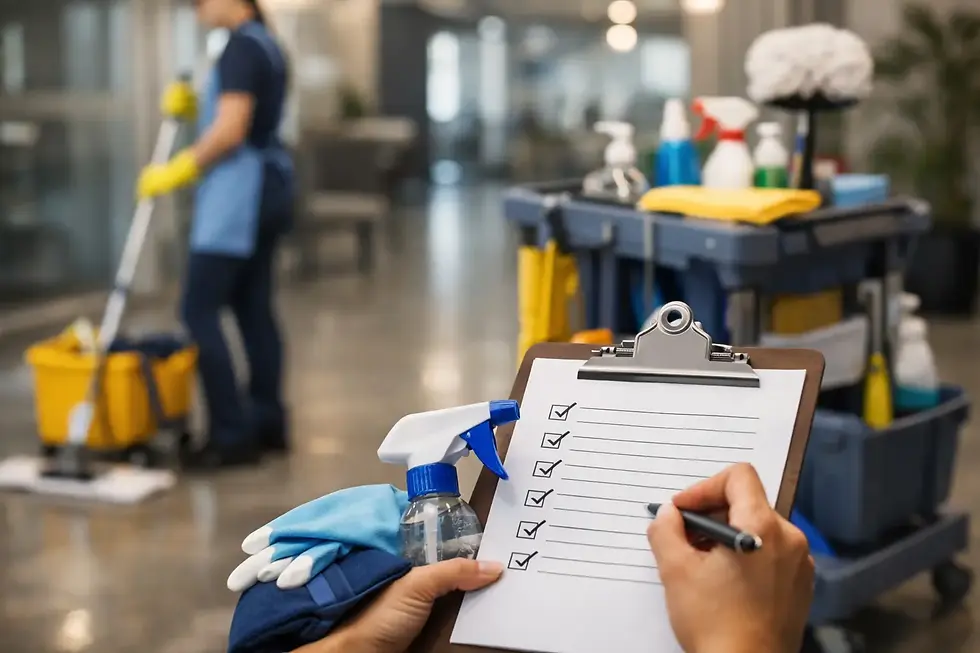
Routine inspections help property managers catch recurring issues before tenants do. Walk common areas at different times of day, check restrooms after peak use, look at entry glass in natural light, and pay attention to odors. If cleaners are missing the same details repeatedly, the issue may be training, staffing, or an unclear scope of work.
Reliable commercial cleaning also depends on accountability. Ask whether the provider is bonded and insured, whether crews are trained for the services required, and how urgent concerns are handled. A low price may look attractive at first, but missed visits, poor communication, and floor damage can quickly cost more than a dependable service plan.
Choose a Partner That Can Handle Routine and Specialty Work
Property needs change. A tenant may request a deep clean before an event, a lobby carpet may need emergency spot removal, or a renovation may leave dust throughout a shared corridor. Working with separate vendors for each task can slow response time and create unnecessary coordination work.
A full-service commercial cleaning company can support recurring janitorial care along with disinfecting, carpet cleaning, window cleaning, floor restoration, deep cleaning, and post-construction cleanup. Unique Shine provides flexible commercial cleaning support for Albany-area properties, with trained, insured, and bonded teams focused on consistent results and customer satisfaction.
The best next step is to walk your property with fresh eyes. Start at the entrance, use the restroom, ride the elevator, and look closely at the floors and touchpoints your tenants use every day. That short walkthrough will show you where a stronger cleaning plan can make the most immediate difference.

Comments