

How to Improve Office Sanitation at Work
A smudged glass entryway, an overflowing break room trash can, and a restroom that runs out of soap at noon send a message before a client or employee says a word. They suggest that details are being missed. For office managers and property managers, learning how to improve office sanitation is not about making a workplace look polished for a single visit. It is about creating a dependable system that protects people, supports productivity, and keeps the facility ready for business.
Office sanitation works best when it is managed like any other operational priority: with clear standards, assigned responsibilities, documented routines, and professional support when the workload requires it. A once-a-week surface wipe-down may be enough for a low-traffic private office, but it will fall short in a busy shared workplace with visitors, break rooms, conference spaces, and multiple restrooms.
How to Improve Office Sanitation With Clear Standards
The first step is to define what “clean” means for your facility. Without a written standard, cleaning can become subjective. One person may focus on visible dust while another assumes disinfecting door handles is the priority. Both tasks matter, but they need to happen on a reliable schedule.
Walk through the office at the beginning, middle, and end of a typical workday. Look closely at areas that receive the most use: entrances, elevators, reception counters, shared desks, conference rooms, kitchens, restrooms, and copy areas. Note where dirt, fingerprints, odors, clutter, and supply shortages appear first. These are the areas that should shape your sanitation plan.
Your standards should separate routine cleaning from disinfecting. Cleaning removes dirt, debris, and many germs from surfaces. Disinfecting uses an appropriate product and contact time to reduce germs on high-touch surfaces. A desk may need regular cleaning, while a shared conference table, faucet handles, and refrigerator handles may need more frequent disinfection.
It also helps to set standards that can be checked. Rather than asking a team to “keep the restroom clean,” define outcomes such as stocked soap and paper products, empty trash, clean fixtures, dry floors, sanitized touchpoints, and no noticeable odors. Clear expectations make it easier to spot gaps before they become complaints.
Build a Schedule Around Traffic, Not Assumptions
The right sanitation schedule depends on how people actually use the office. A quiet accounting office with a small staff has different needs than a medical-adjacent administrative suite, a call center, or a multi-tenant professional building. Traffic patterns matter more than square footage alone.
Daily service is often appropriate for restrooms, break rooms, entrances, trash removal, and shared touchpoints. Conference rooms may need attention after large meetings, especially when food or outside visitors are involved. Carpets, windows, hard floors, and upholstered seating need less frequent service, but they should not be ignored until visible buildup becomes difficult and expensive to remove.
A practical schedule usually includes daily maintenance, weekly detail cleaning, and periodic deep cleaning. Daily work keeps the office presentable and sanitary. Weekly service addresses areas that collect dust and grime more gradually, such as baseboards, ledges, appliance exteriors, and low-traffic corners. Deep cleaning handles the work that routine service cannot fully cover, including carpet extraction, floor care, detailed restroom cleaning, and buildup around fixtures.
Scheduling also needs to respect operations. Some facilities need cleaning after business hours so cleaners can work efficiently without disrupting employees. Others need daytime porter service for restrooms, lobbies, and common areas. The best approach is the one that keeps standards consistent while fitting your building’s hours and security requirements.
Prioritize High-Touch Surfaces
High-touch surfaces deserve special attention because many people use them throughout the day. Even in an office where employees have individual workstations, shared touchpoints can quickly become overlooked sanitation risks.
Focus recurring disinfection on these areas:
Door handles, push plates, handrails, elevator buttons, and reception counters
Light switches, shared keyboards, printers, copiers, phones, and touchscreen equipment
Break room tables, refrigerator handles, microwave buttons, coffee stations, and sink fixtures
Restroom doors, flush handles, faucet handles, dispensers, and stall latches
Use products according to their label directions. More chemical is not always better, and wiping a disinfectant away too quickly can reduce its effectiveness. Trained commercial cleaners understand the difference between a quick surface wipe and proper disinfection with the required dwell time.
Keep Restrooms and Break Rooms Ahead of Demand
Restrooms and break rooms have an outsized effect on how employees and visitors judge a workplace. They also require closer sanitation control because of moisture, food waste, shared fixtures, and frequent hand contact.
In restrooms, prioritize replenishment as much as cleaning. Soap, paper towels, toilet tissue, feminine hygiene supplies where appropriate, and hand sanitizer should be checked often enough that employees do not encounter empty dispensers. Floors should remain dry and free of debris, both for sanitation and slip prevention. Persistent odors are a sign to look beyond the surface for issues involving trash, drains, fixtures, or ventilation.
Break rooms require a balance of professional cleaning and employee accountability. A cleaning crew can sanitize counters, appliances, tables, sinks, and floors, but food containers left for weeks in a shared refrigerator will still create a problem. Establish a simple policy for labeling food, clearing old items, and cleaning up spills as they happen. This keeps routine janitorial service from turning into avoidable cleanup work.
Make Supplies Easy to Find and Easy to Use
A sanitation plan fails when basic supplies are unavailable at the moment they are needed. Place hand sanitizer in natural traffic areas such as entrances, reception, break rooms, and conference rooms. Keep soap dispensers filled and working. Provide accessible paper towels or other approved hand-drying options in restrooms and food areas.
For employee-managed cleanup, stock a limited, clearly labeled set of supplies for spills and small messes. Avoid leaving unmarked chemicals in cabinets or expecting employees to use products without instructions. Some surfaces, such as electronics, natural stone, specialty flooring, and coated furniture, can be damaged by the wrong cleaner.
Supply levels should be reviewed as part of regular facility management. If a particular restroom regularly runs out of paper towels, the solution may be a larger dispenser, more frequent checks, or a better inventory process. Reordering only after supplies are gone creates unnecessary disruption.
Train Employees Without Making Them the Cleaning Crew
Employees should understand the office’s sanitation expectations, but they should not be expected to replace professional janitorial service. Asking staff to clean restrooms, manage chemical products, or handle deep carpet stains can create inconsistency and take attention away from their actual work.
A short, practical orientation is usually enough. Explain hand hygiene expectations, shared-space cleanup rules, food storage policies, spill reporting procedures, and how to report a sanitation concern. Make reporting easy. If employees do not know whom to contact when a restroom needs attention or a spill occurs, problems tend to linger.
Managers should also encourage people to stay home when ill when possible and follow the organization’s illness policies. Sanitation reduces exposure risks, but it cannot replace sensible workplace practices.
Know When Routine Cleaning Is Not Enough
Some sanitation concerns call for more than a standard nightly service. A seasonal illness spike, water intrusion, construction dust, move-in or move-out activity, an office event, or a long period without detailed cleaning may require a targeted response.
This is where a flexible commercial cleaning partner adds value. Deep cleaning can restore neglected areas before they affect employee confidence or client impressions. Professional carpet cleaning can remove embedded soil and odors that vacuuming cannot reach. Floor stripping and waxing may be needed when hard floors look dull, scuffed, or difficult to maintain. Post-construction cleanup requires a different approach than routine office service because fine dust can settle across vents, ledges, floors, and furnishings.
A dependable provider should be able to adjust the scope based on your building, schedule, and current concerns. The lowest quote is not always the best value if it leaves out high-touch disinfection, supply management, quality checks, or the specialized work your facility will eventually need.
Verify the Results Consistently
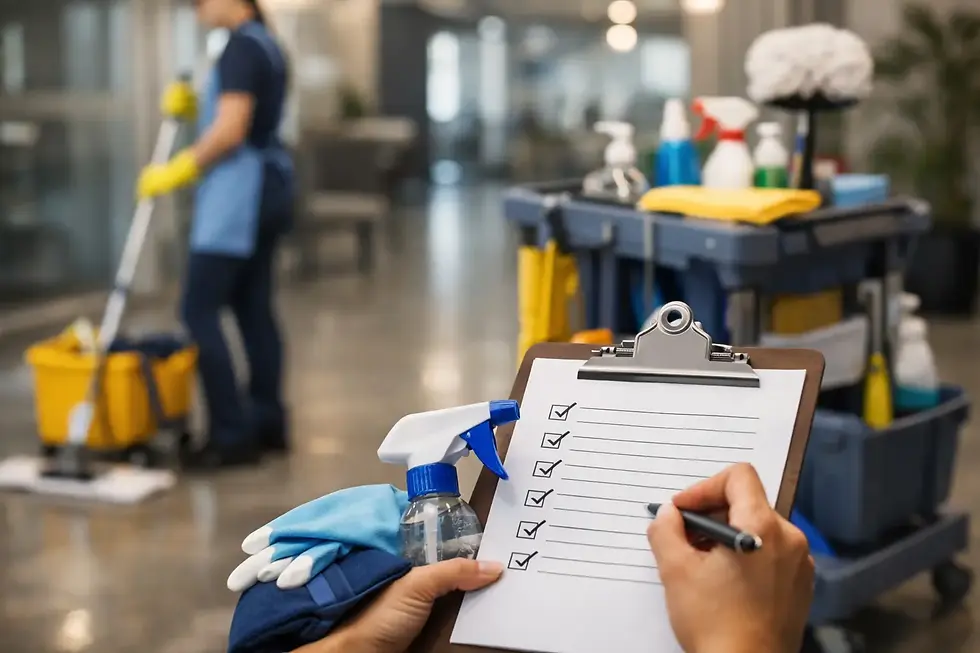
Sanitation is not a set-it-and-forget-it task. Create a simple inspection routine for managers or designated staff. Check restrooms, break rooms, entrances, trash areas, and visible touchpoints at regular intervals. Watch for repeat issues, not just one-time mistakes. If the same area is missed every week, the schedule, scope, or communication process needs to change.
A quality cleaning program should make accountability visible. Confirm who performs the work, when service occurs, how concerns are reported, and how quickly they are resolved. Insured and bonded cleaning professionals with trained teams provide an added layer of confidence, especially in offices with sensitive information, controlled access, or busy client-facing areas.
For Albany-area offices that need reliable recurring service or a more detailed sanitation reset, Unique Shine can help create a cleaning plan that fits the way your facility operates. A clean office should not depend on last-minute reminders or a scramble before visitors arrive. It should be a standard your employees and clients can count on every day.

Comments