

How to Compare Janitorial Services Companies
A cleaning crew may be in your building after business hours, but its work is visible the moment employees, tenants, customers, or visitors arrive. Smudged glass, overflowing trash, dull floors, and missed restrooms quickly affect how people view your operation. That is why choosing between janitorial services companies is not simply a price decision. It is a decision about reliability, safety, appearance, and the daily experience of everyone who uses your facility.
For Albany-area businesses, the right provider should make facility care easier to manage. They should follow a clear plan, communicate when needs change, and deliver consistent results without interrupting your operations.
Start With Your Facility's Actual Needs
Before requesting estimates, define what needs to be cleaned, how often, and when service can take place. A small professional office may need nightly trash removal, restroom cleaning, vacuuming, and touchpoint disinfecting. A multi-tenant property, medical office, retail site, school, or industrial facility may require a more detailed plan with different priorities by area.
Square footage matters, but it is not the only factor. Foot traffic, restroom use, floor type, business hours, occupancy, and the presence of public-facing spaces all affect the right cleaning schedule. A lobby that sees visitors all day may need attention more often than a conference room used twice a week.
Be specific about special requirements as well. Carpet extraction, window cleaning, strip-and-wax floor services, post-construction cleanup, deep cleaning, and disinfecting are not always part of a standard recurring scope. A strong commercial cleaning partner can provide these services when needed and explain how they fit into the ongoing maintenance plan.
What Sets Reliable Janitorial Services Companies Apart
The best janitorial services companies do more than send a cleaner with a checklist. They build an accountable process around your property. That process should be clear before the first service begins.
Trained, insured, and accountable staff
Your cleaning team will have access to offices, common areas, restrooms, and sometimes sensitive workspaces. Ask whether the company uses trained cleaners and whether it is bonded and insured. These details protect your business and show that the provider takes its responsibility seriously.
Training also affects quality. Proper floor care, chemical handling, disinfection methods, and safe equipment use are specialized skills. A provider should be able to explain how its team handles the surfaces and environments in your building rather than offering the same approach to every client.
Clear scope and quality control
Vague promises of a “clean building” lead to frustration. A detailed service scope identifies what will be cleaned, how frequently, and what tasks are handled during each visit. It should cover routine work such as trash removal, restroom sanitation, dusting, vacuuming, mopping, and entryway care, along with any agreed specialty services.
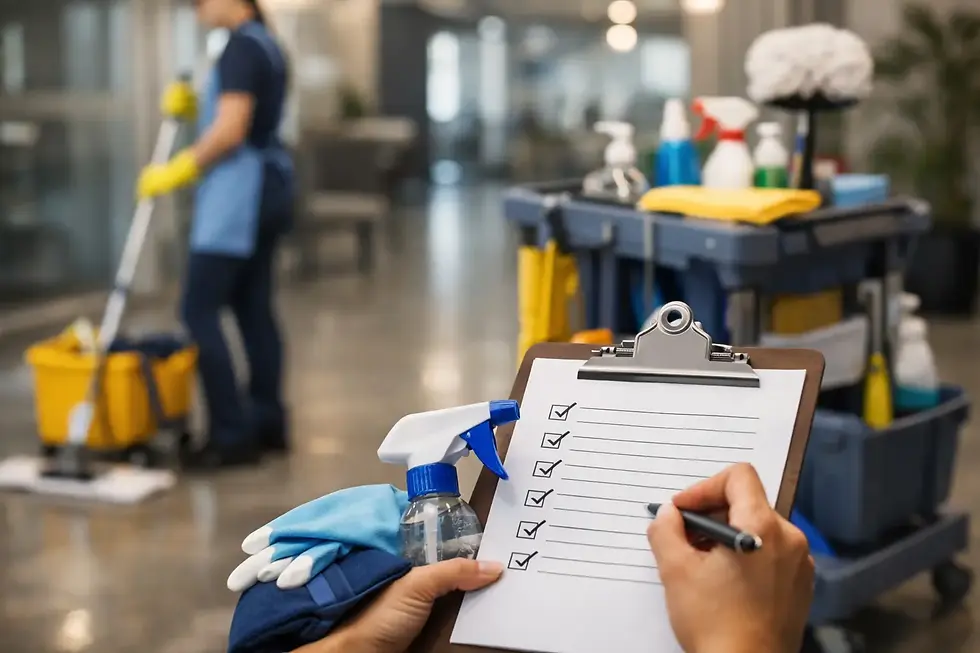
Quality control is just as important as the scope itself. Ask how the company checks completed work and how it handles missed details. Some issues are inevitable in any active facility. What matters is whether the provider responds quickly, corrects the issue, and prevents it from becoming a pattern.
Scheduling that protects your operations
Cleaning should support your business, not disrupt it. Many facilities need evening, overnight, early morning, or weekend service to avoid interfering with employees and customers. Others need daytime porter support for restrooms, spills, high-traffic entrances, or common areas.
A flexible provider can recommend a schedule based on your business hours and building activity. Around-the-clock availability can be especially valuable when an urgent spill, event cleanup, or unexpected sanitation need cannot wait until the next regular visit.
Compare Estimates Beyond the Monthly Price
A low quote can be appealing, especially when operating costs are under pressure. But the lowest number is not always the lowest long-term cost. If a provider understaffs the account, skips periodic work, or does not have a dependable backup plan, your team may spend more time managing cleaning problems than the savings are worth.
When reviewing estimates, make sure each company is pricing a comparable scope. One quote may include restroom consumables, carpet care, and periodic floor maintenance, while another only covers basic nightly cleaning. Ask what is included, what is billed separately, and whether the proposed frequency matches the needs of your facility.
It also helps to ask who supplies equipment and cleaning products. Commercial-grade vacuums, floor machines, microfiber systems, and appropriate products can make a visible difference in results. The right products depend on your surfaces, your industry, and any health or safety requirements your organization follows.
Questions Worth Asking Before You Hire
A productive conversation with a cleaning provider should give you direct answers, not broad sales language. Ask how the company staffs accounts when a regular cleaner is unavailable, who your point of contact will be, and how quickly service concerns are addressed.
You should also ask whether the provider has experience with facilities similar to yours. A company that understands offices may be a good fit for professional spaces, while a high-traffic retail, healthcare, education, or industrial environment may require additional procedures and more frequent attention. Experience across industries can be useful, but the proposed plan should still be tailored to your building.
Finally, ask for a walkthrough before accepting a final proposal. A walkthrough gives the company a chance to see access points, floor conditions, restrooms, break areas, storage needs, and areas that receive heavy use. It also gives you a chance to explain recurring frustrations with your current cleaning arrangement.
Look for a Partner That Can Handle More Than Routine Cleaning
Routine janitorial service keeps a facility orderly day after day. However, most properties eventually need work that falls outside the standard schedule. Carpets collect embedded soil, hard floors lose their finish, windows show fingerprints and weather exposure, and construction projects leave behind dust that ordinary cleaning may not remove.
Working with one qualified provider for recurring janitorial work and specialized services can simplify facility management. The provider already understands your property, your schedule, and your expectations. That can be more efficient than searching for a separate vendor each time a deeper cleaning need arises.
Still, breadth should not replace attention to detail. A company may offer many services, but it should explain which ones are appropriate for your current needs and when they should be scheduled. For example, a seasonal deep clean may be valuable before a major event or after a busy period, while strip-and-wax floor work should be planned around your flooring type and traffic level.
Make the First Month a Working Test
Even a well-planned transition takes adjustment. During the first few weeks, inspect the areas that matter most to your facility: entrances, restrooms, break rooms, high-touch surfaces, carpets, and floors. Share feedback promptly and specifically. “Restrooms need more attention before morning opening” gives a provider something practical to address.
A dependable company will welcome that feedback and use it to fine-tune the service plan. The goal is not to create more oversight for your staff. The goal is to establish a reliable routine that allows you to focus on your employees, tenants, customers, and core business.
At Unique Shine, commercial clients can request a free estimate based on the needs of their facility, whether they need recurring janitorial support, a one-time deep clean, or specialized floor and carpet care. The right cleaning relationship should leave your building looking cared for and your team confident that the details are covered.
A clean facility is one of the few business investments people notice without being asked to notice it. Choose a provider that treats that visibility with the same care you do.


Comments