
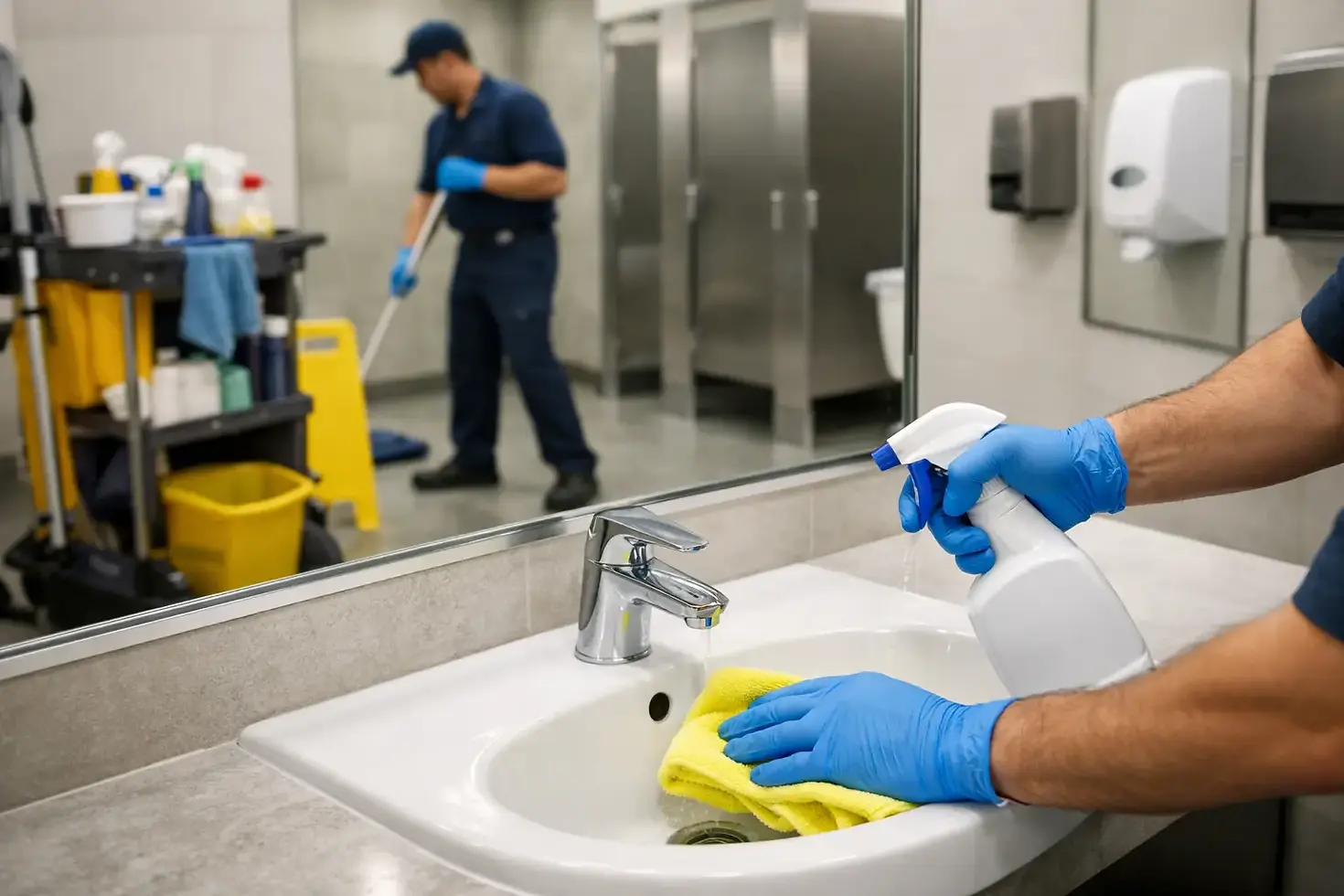
How to Clean Commercial Restrooms the Right Way
A commercial restroom tells employees, visitors, tenants, and customers what to expect from the rest of your facility. A spotless lobby cannot offset an empty soap dispenser, a lingering odor, or residue around a toilet base. Knowing how to clean commercial restrooms means building a repeatable process that addresses hygiene, appearance, safety, and supply levels every time.
For busy offices, retail locations, medical practices, schools, warehouses, and multi-tenant properties, restroom cleaning is not a task to leave to chance. It requires the right sequence, trained staff, appropriate products, and a schedule based on actual traffic rather than guesswork.
How to Clean Commercial Restrooms Step by Step
The most effective restroom cleaning routine moves from clean areas to dirty areas and from high surfaces to low surfaces. That order reduces cross-contamination and prevents cleaners from re-soiling surfaces they have already completed.
Start with safety, ventilation, and supplies
Place wet-floor signs at the entrance before cleaning begins. If the restroom has a fan, turn it on. Open doors when practical to improve airflow, but maintain privacy and use signage that clearly indicates the restroom is temporarily being serviced.
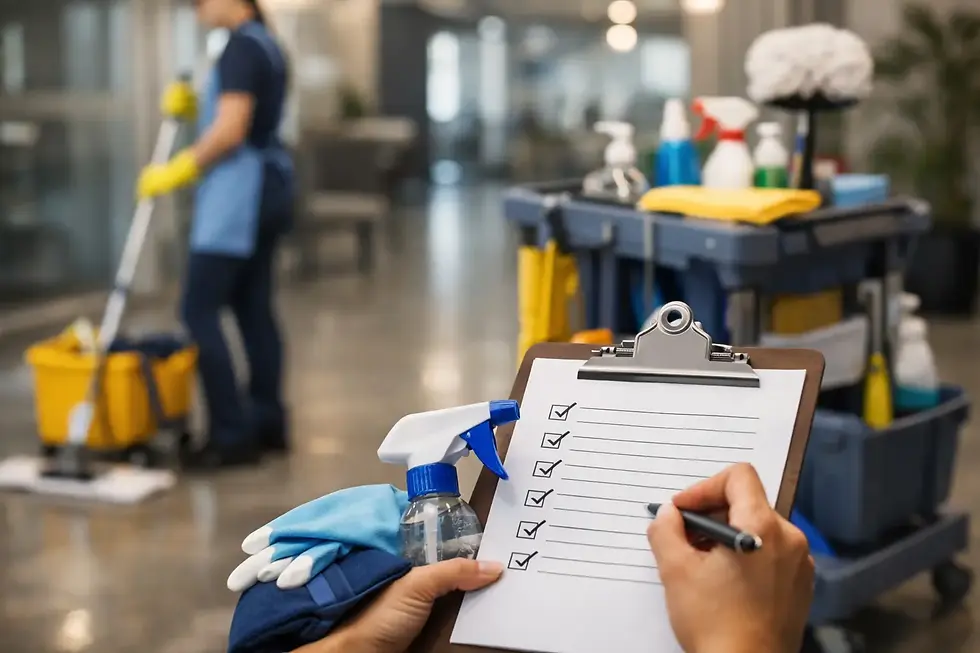
Bring all needed supplies into the area before starting. A professional restroom cart should include color-coded microfiber cloths, a mop and bucket or flat mop system, a toilet bowl applicator, gloves, approved cleaner-disinfectant, glass cleaner, hand soap, paper products, trash liners, and replacement dispensers or batteries when needed. Using dedicated restroom tools matters. A cloth or mop used around toilets should never be used in break rooms, offices, or public-facing areas.
Wear appropriate personal protective equipment and change gloves when moving from toilet cleaning to touchpoint cleaning or restocking. Read product labels closely. Disinfectants must remain wet on a surface for the listed contact time to work as intended. Never mix cleaning chemicals, especially bleach and acidic toilet bowl cleaners.
Remove trash and check the room condition
Empty every waste receptacle, including sanitary disposal units where applicable. Replace liners before wiping or disinfecting surfaces. Look for overflowing trash, clogged toilets, leaks, vandalism, broken dispensers, loose fixtures, and low supply levels. These issues affect the user experience, but they can also create slip, sanitation, or maintenance concerns.
Record problems that cannot be resolved during cleaning and report them promptly. A reliable cleaning provider does more than make a problem look better for the moment. They give facility managers clear visibility into repairs and recurring trouble spots.
Apply cleaner to toilets and urinals first
Apply the appropriate bowl cleaner inside toilet bowls and urinals, including under the rim. Let it dwell according to the product instructions while you clean other areas. This gives the cleaner time to break down mineral buildup, soil, and odor-causing residue without adding unnecessary scrubbing.
Clean and disinfect the exterior of toilets and urinals with special attention to flush handles or sensors, seats, lids, hinges, tank tops, partition-side surfaces, and the floor area surrounding each fixture. Do not overlook the base of toilets. Urine splash and moisture often collect there, causing persistent odor even when the rest of the restroom appears clean.
Use a dedicated bowl brush or applicator only inside bowls and urinals. After scrubbing, flush and inspect for stains, buildup, or poor drainage. Hard-water deposits may require periodic specialty treatment, particularly in older buildings or high-use facilities.
Clean sinks, counters, mirrors, and touchpoints
Work across the sink and counter area next. Remove visible debris first, then clean and disinfect faucets, handles, sink basins, counters, soap dispensers, hand dryer buttons, and paper towel dispenser levers. For touchless fixtures, clean the sensor areas and surrounding surfaces without oversaturating electronic components.
Polish mirrors and chrome fixtures after cleaning to remove water spots and streaks. The difference is noticeable. A clean mirror, dry counter, and bright faucet make a restroom feel maintained even during a busy workday.
High-touch surfaces deserve particular attention because many users contact them between handwashing and exiting. Include door handles, stall latches, grab bars, light switches, baby changing stations, and accessible fixture controls. Follow the disinfectant label for contact time instead of spraying and immediately wiping the product away.
Restock before cleaning the floor
Refill soap, paper towels, toilet tissue, seat covers, hand sanitizer, and feminine hygiene supplies based on the needs of the location. Do not simply fill dispensers until they are empty. Checking stock at every service helps prevent a restroom from running out during peak use.
A good standard is to inspect each dispenser for function as well as supply. Paper towels that jam, soap dispensers that drip, and empty battery-powered touchless units quickly become customer complaints. In facilities with high traffic, such as restaurants, clinics, gyms, or public buildings, daytime checks may be necessary in addition to nightly janitorial service.
Finish with floors and odor control
Sweep or vacuum loose debris from corners, behind doors, and around fixture bases. Then mop from the farthest point toward the exit using a clean restroom-only mop head and properly diluted floor solution. Pay close attention to grout lines, edges, and areas beneath urinals and sinks.
Odor should be treated as a cleaning signal, not covered with fragrance. If an unpleasant smell remains after cleaning, check floor drains, toilet bases, urinal splash zones, trash receptacles, and ventilation. A dry floor drain can release sewer gas, while a damaged wax ring or hidden leak may require maintenance. Air fresheners can support a pleasant environment, but they cannot solve the source of the problem.
Before removing wet-floor signs, make one final inspection. Fixtures should be clean and dry on the outside, supplies should be available, floors should be free of debris, and no standing water should remain around sinks or toilets.
Set the Right Commercial Restroom Cleaning Frequency
There is no single schedule that works for every facility. The right frequency depends on traffic, operating hours, restroom size, the type of visitors, and the cleanliness standard your organization needs to maintain.
An office with a small team may need detailed service once each business day and a quick supply check during the day. A medical office, retail center, school, event venue, or customer-facing business may need several touchpoint and supply checks each day. High-volume restrooms can require cleaning on a set interval, such as every two to four hours, especially during peak periods.
Daily cleaning should cover fixtures, counters, touchpoints, trash, restocking, and floors. Weekly work can include more detailed partition cleaning, wall spot cleaning, vent dusting, and drain attention. Monthly or scheduled deep cleaning should address grout, tile, high dusting, mineral deposits, floor-machine work where appropriate, and difficult areas behind fixtures.
Common Restroom Cleaning Mistakes That Create Complaints
Many restroom issues are caused by inconsistency rather than a lack of effort. Cleaning only what is visible leaves odor-causing residue near fixture bases, behind doors, and under sinks. Rushing through disinfecting without allowing proper dwell time can reduce the effectiveness of the product.
Another common problem is using too much product. Excess cleaner can leave sticky floors, hazy mirrors, residue on dispensers, and strong chemical odors. More chemical is not automatically better. Proper dilution, clean tools, and correct application create better results and protect surfaces over time.
Facility teams should also avoid treating every restroom identically. A private executive restroom, a heavily used employee restroom, and a public customer restroom have different traffic patterns and supply demands. Inspection data, employee feedback, and recurring service logs help identify where extra attention is needed.
When Professional Janitorial Support Makes Sense
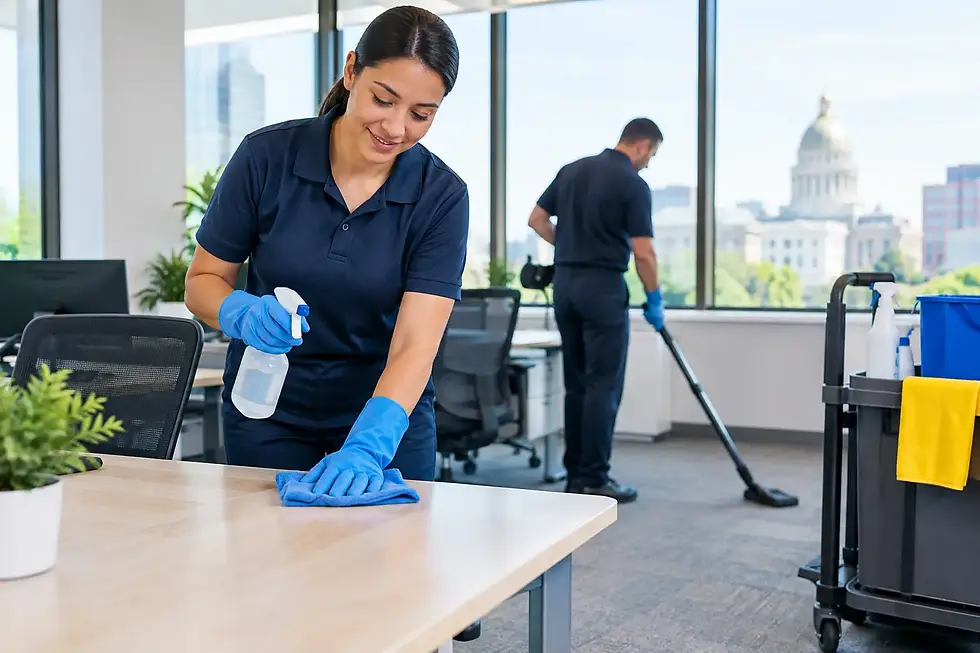
In-house teams can handle routine restroom upkeep when staffing, training, and supervision are consistent. The trade-off is that restroom cleaning competes with other responsibilities, and missed service becomes noticeable quickly. Professional janitorial support is often the better fit when a facility needs dependable coverage, after-hours service, trained cleaners, documented routines, or help across multiple areas of the building.
For Albany-area businesses, Unique Shine provides commercial cleaning support designed around the facility's schedule and standards. A dependable provider can handle daily restroom maintenance while also addressing periodic deep cleaning, floor care, disinfecting, and other work that keeps the entire property looking professional.
The best restroom program is one people rarely have to think about. When supplies are full, fixtures are clean, floors are dry, and odors are under control, your facility can make the right impression without demanding attention from your team.

Comments