

Commercial Kitchen Cleaning Guide for Managers
A commercial kitchen can look busy and productive while grease is building behind equipment, floors are becoming slippery, and high-touch points are being missed between shifts. This commercial kitchen cleaning guide is built for managers who need a practical system that protects food safety, supports staff, and keeps the facility ready for inspection.
Clean kitchens do not happen because someone remembers to wipe down a counter at the end of the night. They happen when responsibilities are clear, supplies are available, and routine cleaning is backed by scheduled deep cleaning. The right plan also accounts for the type of operation. A small café, school cafeteria, hotel kitchen, and high-volume restaurant may all need different frequencies, even when the core standards are the same.
Start With Cleaning, Sanitizing, and Degreasing
These terms are often used together, but they solve different problems. Cleaning removes visible soil, food residue, and dirt from a surface. Sanitizing reduces microorganisms on a properly cleaned food-contact surface. Degreasing breaks down the oils and fats that collect on cooking equipment, walls, floors, and exhaust-area surfaces.
For example, wiping a prep table with a cleaner may make it look good, but it is not the full process for a surface used to prepare food. The surface must first be cleaned, then sanitized with a food-safe product mixed and applied according to its label instructions. Using too little sanitizer may not be effective. Using too much can leave an unsafe residue or damage the surface.
Grease requires its own attention. General-purpose cleaner may be sufficient for light soil, but it often will not remove baked-on grease around fryers, ovens, ranges, and floor edges. Choose products designed for the material and the level of buildup. Strong degreasers can be useful, but they should never be mixed with other chemicals or used without proper ventilation and employee training.
Build a Commercial Kitchen Cleaning Schedule
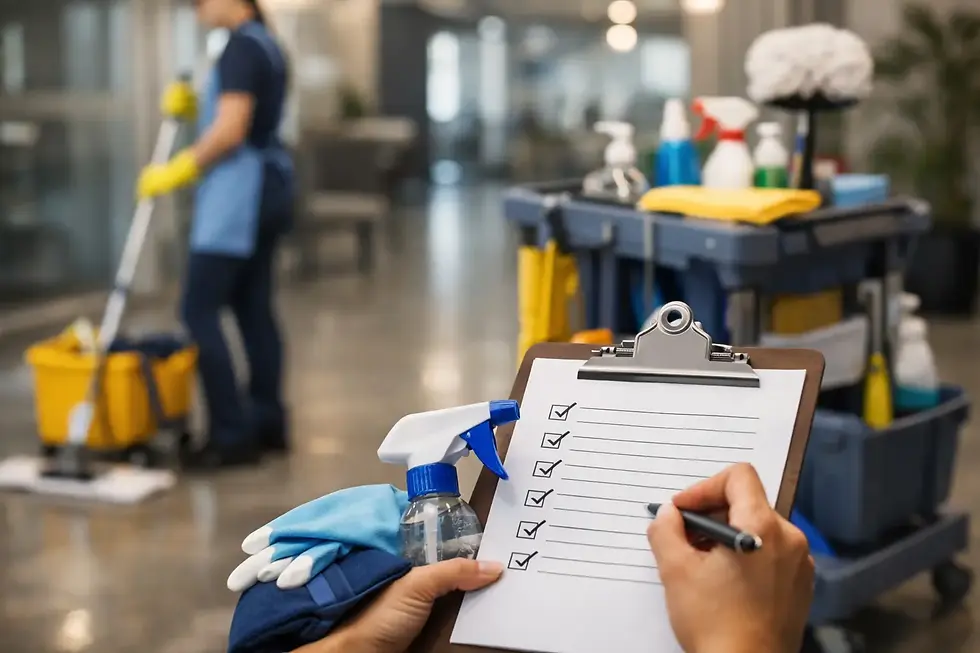
A workable schedule divides tasks by frequency and assigns each one to a role, not simply to "the closing crew." When every task belongs to everyone, it often belongs to no one. Managers should use a visible checklist, initialed or digitally logged, so missed work is identified before it becomes a larger sanitation or maintenance issue.
Tasks for Every Shift
During service, staff should clean spills promptly, especially around cooking lines, dish areas, and walk-in entrances. Food-prep surfaces need cleaning and sanitizing between tasks and after handling raw proteins. Wash hands frequently, empty full trash containers, and keep utensils, towels, and wiping cloths properly stored.
At closing, clean and sanitize prep tables, cutting boards, sinks, handles, small appliances, and frequently touched controls. Sweep and wet mop floors using the right solution for the floor type. Do not forget the lower surfaces that customers never see: equipment legs, floor drains, splash zones near dish machines, and wall bases collect residue quickly.
Daily and Weekly Work That Prevents Buildup
Daily work should include cleaning the exterior of fryers, grills, ovens, refrigeration handles, microwave interiors, and dishwashing equipment. Remove food debris from drains and inspect mats for grease. Launder reusable mop heads and cleaning cloths properly rather than leaving them damp in a closet.
Weekly tasks usually go further. Pull movable equipment away from walls where safe to do so, clean underneath it, scrub floor edges, clean shelves in coolers, and wipe walls near cooking stations. Check gaskets, door tracks, and fan guards for spills and residue. These areas can become a source of odors, pests, and contamination when ignored.
The exact frequency depends on volume. A kitchen producing hundreds of meals per day may need some of these tasks every night. A lower-volume office cafeteria may be able to schedule them weekly. The condition of the kitchen, not just the calendar, should guide the plan.
Monthly and Periodic Deep Cleaning
Deep cleaning addresses the work that cannot be completed well during a standard closing shift. This can include moving heavy equipment, cleaning behind and beneath cooking lines, removing accumulated grease from walls and floor edges, detailed floor care, and washing hard-to-reach surfaces.
Review hood, duct, and fire-suppression cleaning requirements separately. Exhaust-system cleaning has safety and compliance implications, and many operations need a qualified specialist based on cooking volume, fuel type, and local requirements. A janitorial partner can support the surrounding kitchen and floor cleaning, but specialized hood and duct work should be handled by the right provider.
Focus on the Areas That Carry the Most Risk
Some kitchen surfaces create more risk than others because they are exposed to food, moisture, grease, or frequent hand contact. Give these areas clear attention during inspections:
Food-contact surfaces, including prep tables, cutting boards, slicers, utensils, and ice machine components.
Cooking-line surfaces, especially fryer exteriors, grill sides, oven doors, knobs, and backsplash areas.
Floors, drains, wall bases, and mats where grease and standing water can create slip hazards and odors.
Refrigerators, walk-ins, gaskets, shelving, and handles that are touched constantly throughout the day.
Waste areas, including trash lids, dumpster approaches, and recycling stations that can attract pests.
Do not overlook high-touch points outside the kitchen itself. Door handles, time clocks, light switches, phones, and restroom fixtures can transfer soil between staff areas and food-service spaces. A targeted disinfecting routine is useful for these points, particularly during illness outbreaks, but disinfectant should be used according to contact-time directions rather than sprayed and immediately wiped away.
Protect Floors Without Damaging Them
Kitchen floors take more abuse than most commercial surfaces. Grease, water, dropped food, rolling carts, and repeated mopping can wear down finishes and leave grout or textured surfaces difficult to clean. The goal is not only a clean appearance. It is a floor that provides dependable traction and does not hold odors or residue.
Start by sweeping thoroughly before mopping. Mopping over loose food particles can push soil into corners and drains. Use a degreasing cleaner appropriate for the floor material, change dirty solution before it redeposits grease, and allow the floor to dry before traffic resumes. Place wet-floor signs whenever conditions require them.
Avoid assuming that stronger chemicals always deliver better results. Harsh products can dull certain floor finishes, damage grout, or create slick residue when not rinsed correctly. When floors remain dark, tacky, or slippery after routine mopping, the problem may call for periodic machine scrubbing or professional deep cleaning rather than more daily chemical use.
Store Chemicals and Tools Like Safety Equipment
A well-cleaned kitchen can still become unsafe if chemicals are improperly stored. Keep cleaning products away from food, food-contact items, and single-service supplies. Every secondary bottle should be clearly labeled. Safety data sheets should be accessible, and employees should understand dilution ratios, required protective equipment, and what to do after an accidental spill.
Never mix chemicals. Combining products such as bleach and ammonia can create dangerous fumes. It is also wise to use color-coded cloths and mops when possible, separating restroom tools from kitchen tools to reduce cross-contamination.
Cleaning equipment needs cleaning too. Dirty mop buckets, worn brushes, overloaded vacuum filters, and soiled cloths can spread the very soil they are meant to remove. Establish a replacement and laundering routine, particularly for mop heads used on greasy kitchen floors.
Inspect, Document, and Correct Quickly
A short daily walkthrough is one of the most effective management tools available. Check floors and drains, prep surfaces, refrigeration areas, waste stations, and equipment exteriors before opening or after close. Look for signs that routine work is being rushed: sticky handles, debris under equipment, grease along wall bases, lingering odors, or dirty water left in buckets.
Documentation is not about creating paperwork for its own sake. It shows that the cleaning system is being followed, helps identify repeat problems, and gives managers a clear record when responsibilities shift between teams. If one area consistently fails inspection, determine whether the issue is training, time, access, supplies, or an unrealistic schedule.
For Albany-area facilities that need help beyond daily staff cleaning, Unique Shine can support recurring janitorial service, disinfecting, floor care, and scheduled deep cleaning around business operations. A professional crew is especially valuable when grease buildup, floor conditions, staffing gaps, or an upcoming inspection demand more than a standard closing routine.
A dependable kitchen cleaning program should make the next shift easier, not leave problems waiting behind the equipment. Set a schedule your team can realistically maintain, inspect the details that affect safety, and bring in trained support before buildup turns into a disruption.

Comments