

Commercial Cleaning Services Meaning Explained
A clean lobby can make a strong first impression. A neglected restroom, dusty workstation, or streaked floor can undo it just as quickly. When managers ask about the commercial cleaning services meaning, they are usually trying to determine more than who will empty trash cans. They need to know whether a cleaning company can protect their facility’s appearance, hygiene, and day-to-day operations.
Commercial cleaning services are professional cleaning solutions designed for business, institutional, and public-facing properties. The work is planned around the building, the people who use it, and the standards the facility must meet. It can range from nightly janitorial service for an office to detailed floor restoration, disinfecting, carpet care, window cleaning, or post-construction cleanup.
What Does Commercial Cleaning Services Mean?
At its core, commercial cleaning means cleaning performed in a non-residential environment by trained professionals. These environments include offices, medical and dental practices, schools, retail stores, apartment common areas, warehouses, restaurants, financial institutions, fitness centers, and construction sites.
The service is not one fixed checklist. A small Albany office may need vacuuming, restroom cleaning, trash removal, and break room upkeep several evenings a week. A busy property manager may need common-area cleaning, seasonal floor care, and responsive service across several buildings. A facility that has just completed renovations may need dust removal, debris cleanup, and detailed finishing before employees or customers enter the space.
That flexibility is a major part of the commercial cleaning services meaning. The right provider builds a service plan around your traffic levels, business hours, surfaces, risk areas, and budget instead of applying the same routine to every location.
Commercial Cleaning vs. Residential Cleaning
Residential cleaning focuses on private homes and household routines. Commercial cleaning is built for larger spaces, higher traffic, more varied surfaces, and business-specific expectations.
For example, a commercial cleaner may need to work after closing, follow building access procedures, use equipment suitable for large carpeted areas, and maintain consistent results across multiple restrooms or floors. The cleaner must also work carefully around confidential documents, electronics, customer areas, and employees who may still be on site.
Professional commercial work often requires a higher level of accountability. Businesses should look for cleaners who are trained, insured, and bonded, with clear supervision and a reliable process for handling concerns. A low price has limited value if service is inconsistent, cleaning is skipped, or the provider cannot respond when an urgent need arises.
What Is Included in Commercial Cleaning?
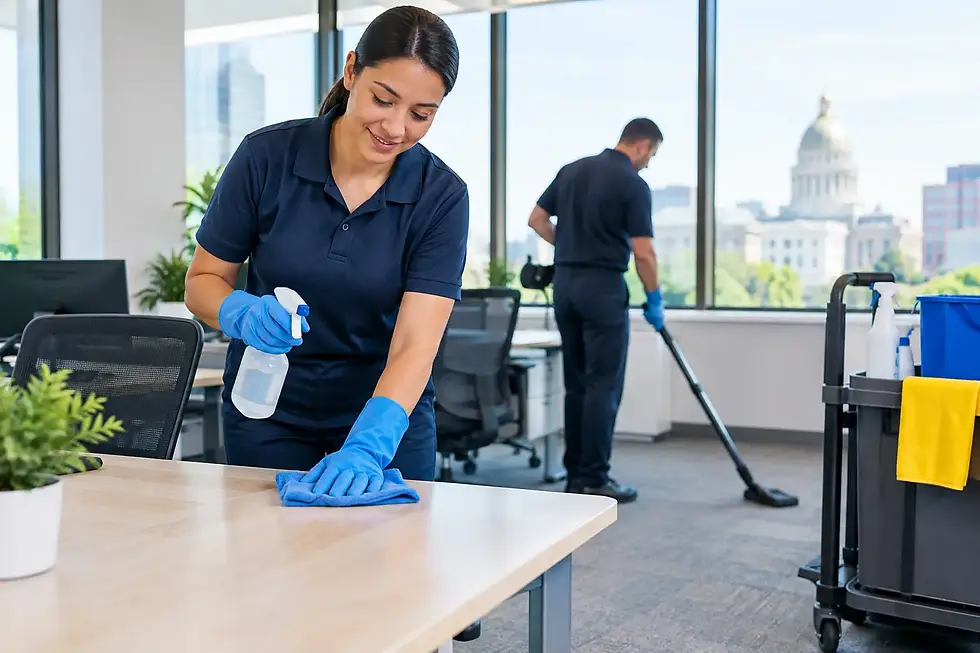
The scope depends on the facility, but recurring janitorial service commonly covers everyday tasks that keep a workplace clean and presentable. This may include dusting accessible surfaces, vacuuming carpets, mopping hard floors, emptying trash and recycling, cleaning restrooms, wiping touchpoints, and maintaining break rooms or reception areas.
A good plan also defines the details. Who restocks restroom consumables if that is part of the agreement? Are interior glass doors cleaned at each visit? How often are baseboards, high-touch areas, and entry mats addressed? Which rooms are cleaned nightly, and which receive weekly or monthly attention? Clear expectations prevent the common frustration of assuming a task is included only to find that it was not.
Some facilities need specialized cleaning beyond routine maintenance. These services may include:
Carpet cleaning to remove embedded soil, stains, and odors from high-traffic areas.
Floor stripping and waxing to restore and protect vinyl composition tile and similar hard surfaces.
Window cleaning for a clearer, more professional appearance inside and out.
Disinfecting services for high-touch areas, shared workspaces, and facilities with heightened sanitation needs.
Deep cleaning for neglected spaces, seasonal resets, move-ins, move-outs, or inspections.
Post-construction cleanup to remove fine dust, adhesive residue, debris, and construction-related buildup.
Not every property needs every service every week. That is why a practical cleaning plan separates daily needs from periodic projects. Routine janitorial service maintains the baseline. Specialized work helps preserve surfaces and addresses problems that standard cleaning alone cannot solve.
Why Businesses Use Professional Cleaners
Businesses hire commercial cleaners because cleanliness affects far more than appearance. Employees notice when restrooms are not maintained, trash overflows, or shared spaces feel neglected. Visitors and clients form opinions quickly, especially in reception areas, conference rooms, retail floors, and public restrooms.
There is also a practical facilities-management reason. Dirt, salt, moisture, and grit can wear down floors and carpets over time. In the Albany area, winter weather can bring tracked-in salt and slush that make entrances look poor and create slip concerns. Regular mat care, floor cleaning, and prompt attention to wet areas can help protect both the facility and the people using it.
Outsourcing cleaning can also give managers a more dependable system. Instead of assigning cleaning tasks to office staff or trying to coordinate several separate vendors, a full-service commercial cleaning partner can manage recurring service and specialized needs under one plan. It depends on the building and budget, but this approach often makes scheduling and accountability easier.
How Often Should a Commercial Space Be Cleaned?
There is no universal schedule. Frequency should follow how the building is used, not just its square footage. A small office with limited foot traffic may be well served by two or three evening visits per week. A medical office, school, retail location, or high-traffic workplace may need daily service or attention multiple times a day in key areas.
Restrooms, entrances, break rooms, and customer-facing surfaces usually need the most frequent care. Private offices, storage areas, and low-traffic meeting rooms may not require the same level of daily attention. A professional walk-through helps identify these differences and creates a schedule that focuses labor where it matters most.
The schedule should also be flexible. Businesses have events, seasonal traffic changes, inspections, construction work, and unexpected sanitation concerns. A provider that can add deep cleaning, carpet care, disinfecting, or an extra visit when needed offers more value than one that only follows a rigid routine.
What to Expect From a Commercial Cleaning Estimate
A reliable estimate should be based on the actual condition and needs of your property. Square footage matters, but it is not the only factor. The number of restrooms, floor types, employee count, public traffic, cleaning frequency, access requirements, and service timing all affect the scope and price.
During a site evaluation, be ready to discuss the areas that cause the most concern. Maybe the lobby floors lose their shine quickly. Maybe cleaning quality drops off after the first month with your current vendor. Maybe your team needs service after hours, or you need a company that can handle both everyday cleaning and periodic floor work.
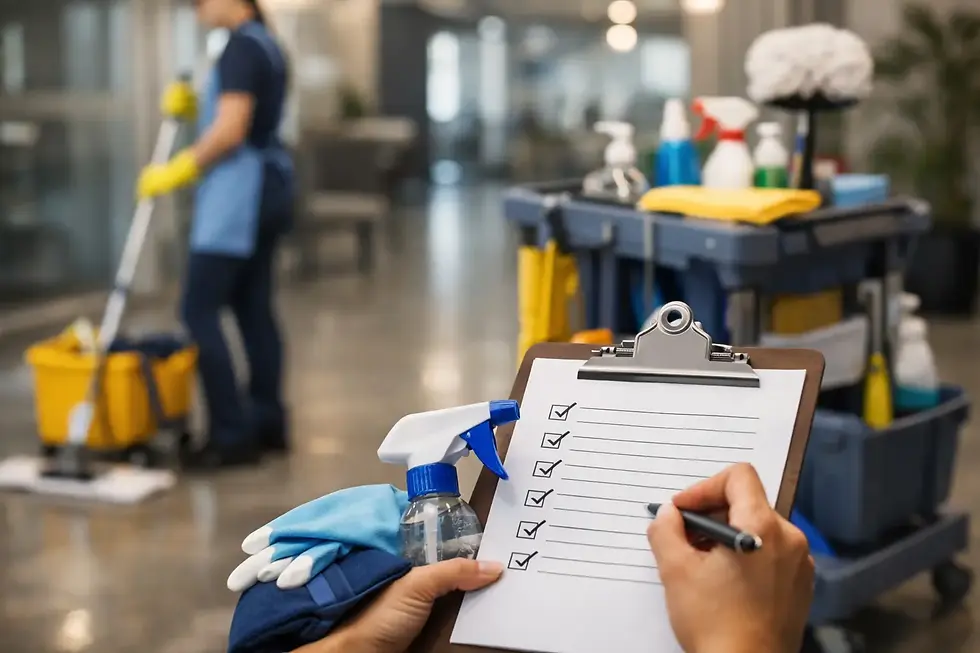
Ask how quality is checked and how service issues are handled. The answer should be specific. You want a provider with a clear point of contact, trained cleaning staff, and a process for correcting missed details promptly. Customer satisfaction is not just a phrase on a proposal. It should show up in communication, follow-through, and visible results.
Choosing the Right Commercial Cleaning Partner
The best cleaning company is not necessarily the one offering the longest task list. It is the one that understands your facility and performs consistently. Look for a provider with experience in your type of business, appropriate insurance and bonding, flexible scheduling, and the ability to scale from regular janitorial work to deeper, specialized services.
It is also wise to consider responsiveness. If a spill happens before a client visit, a tenant moves out unexpectedly, or a construction project leaves dust throughout the building, you need to know who will answer the phone and how quickly help can be arranged.
Unique Shine provides commercial cleaning and janitorial services for Albany-area businesses that need dependable routine care as well as carpet cleaning, floor services, window cleaning, disinfecting, deep cleaning, and post-construction cleanup. The goal is straightforward: give each facility a clean, professional environment without disrupting the work happening inside it.
A free on-site estimate is a useful place to start. Walk the property with a cleaning professional, point out the areas that matter most, and ask for a plan that fits your hours, standards, and priorities. The right service should make cleanliness one less thing your team has to manage every day.

Comments