

Commercial Cleaning Industry Trends for 2026
A clean lobby, restroom, and workspace do more than make a good first impression. They affect employee confidence, tenant retention, visitor perception, and day-to-day operations. The commercial cleaning industry trends shaping 2026 reflect that reality: businesses are asking for more consistency, more accountability, and cleaning plans built around how their facilities actually operate.
For Albany-area office managers, property managers, and business owners, the goal is not to chase every new cleaning product or buzzword. It is to choose service practices that keep a facility presentable, safe, and ready for the people who use it.
Commercial Cleaning Industry Trends That Matter Most
Cleaning plans are becoming more customized
A one-size-fits-all cleaning schedule rarely works for long. A medical office has different sanitation needs than a warehouse. A multi-tenant office building may need daily restroom attention, frequent lobby service, and periodic carpet cleaning, while a small professional office may only need recurring evening janitorial service and quarterly floor care.
That is why customized scopes of work continue to matter. Facility decision-makers want a provider that can adjust task frequency, staffing, and service hours without turning every change into a complicated process. The strongest cleaning plans identify high-traffic areas, critical touchpoints, seasonal concerns, and the specialized services a property may need over time.
Flexibility also matters when occupancy changes. A growing team, new tenant, renovation project, or extended operating hours can quickly make an old cleaning schedule inadequate. A reliable cleaning partner should be prepared to reassess the plan and recommend practical adjustments.
Day cleaning and off-hours service both have a place
For years, commercial cleaning was largely an after-hours function. That remains the right choice for many offices, schools, and businesses that want cleaners working after employees and customers leave. It can minimize interruptions and allow a crew to complete detailed work efficiently.
At the same time, more facilities are adding daytime cleaning support. A visible attendant can respond to restroom needs, clean up spills, refresh common areas, and maintain entrances during busy periods. This is especially useful in medical settings, retail spaces, large office properties, and facilities with steady visitor traffic.
The right approach depends on the building. Some clients need a nighttime janitorial crew plus limited daytime porter service. Others are best served by an evening schedule alone. What matters is having dependable coverage when the facility needs it, not following a fixed model that does not fit the property.
High-touch cleaning remains part of routine service
Disinfecting is no longer viewed as a separate concern reserved for outbreaks or emergencies. Businesses continue to expect regular attention to shared surfaces such as door handles, elevator buttons, breakroom counters, restroom fixtures, reception areas, and conference rooms.
There is an important distinction between cleaning, sanitizing, and disinfecting. Cleaning removes visible soil and debris. Sanitizing reduces certain germs to safer levels. Disinfecting uses appropriate products and dwell times to address germs on hard surfaces. A professional provider should understand when each process is appropriate and avoid making claims that do not match the service being performed.
For most facilities, the practical answer is a balanced plan: routine cleaning every visit, targeted disinfection of high-touch areas, and deeper service when conditions call for it. This supports a cleaner environment without wasting time or materials on unnecessary treatments.
Technology Is Improving Accountability, Not Replacing People
Commercial cleaning is still a hands-on service. A floor cannot be properly detailed, a carpet cannot be restored, and a restroom cannot be inspected by an app. But technology is making it easier to manage quality and communication.
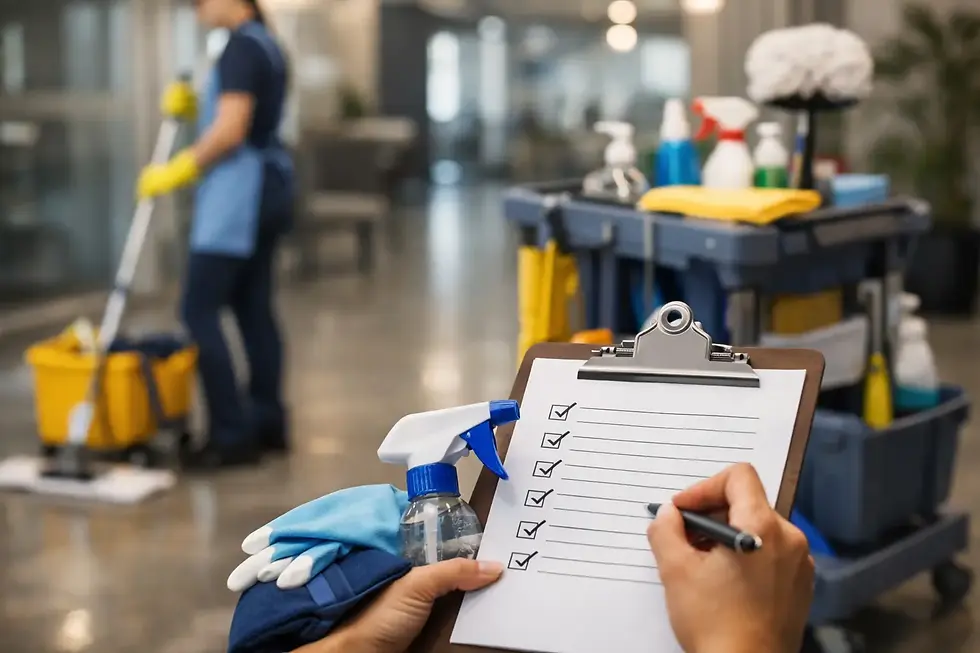
Digital checklists, service logs, inspection records, and quick communication tools help facility managers know what was completed and when. They also give cleaning teams a clearer way to document issues such as supply shortages, damaged fixtures, spills, or areas requiring additional attention.
The value is not technology for its own sake. It is accountability. If a client has a concern, there should be a clear process for reporting it, responding quickly, and making sure the issue is resolved. For multi-site companies and property managers overseeing several buildings, consistent documentation can be especially helpful.
Automation is also appearing in larger facilities through equipment such as robotic floor scrubbers. These tools can support productivity in open, repetitive environments, but they are not a replacement for trained cleaners. Corners, transitions, restrooms, detailed edges, and changing conditions still require professional judgment.
Floor and Carpet Care Are Moving From Reactive to Preventive
Floors take more abuse than almost any other surface in a commercial property. Snow, salt, rain, grit, foot traffic, carts, and spills can wear down finishes and create a tired appearance quickly. In the Capital Region, winter conditions make preventive floor care particularly valuable.
Rather than waiting until floors look damaged, more businesses are scheduling periodic maintenance. This may include routine mopping and machine scrubbing, carpet extraction, spot treatment, burnishing, strip-and-wax service, and entryway mat care. The proper frequency depends on traffic levels, flooring material, and how the space is used.
Preventive maintenance can protect the life of flooring and help avoid larger restoration costs later. It also improves appearance in areas clients and employees notice first, including entrances, hallways, lobbies, and conference spaces. A cleaning company should recommend services based on the condition of the floor, not simply sell the most intensive option every time.
Green Cleaning Expectations Are Becoming More Practical
Businesses increasingly want cleaning practices that support indoor air quality and reduce unnecessary chemical use. This does not always mean every product must carry a particular label, nor does it mean effective cleaning has to be sacrificed. It means selecting products and methods that fit the facility, the surfaces being cleaned, and the people using the building.
Low-odor products may be a priority for offices, schools, healthcare-adjacent spaces, and properties with employees who have sensitivities. Proper dilution systems can reduce waste and ensure products are used as intended. Microfiber tools, efficient equipment, and targeted chemical application can also improve results while using fewer resources.
Green cleaning works best when it is tied to performance. A facility should still look clean, smell fresh without being overpowering, and meet the sanitation standards appropriate to its environment. Ask prospective providers how they choose products, train their teams, and handle special requests.
Staffing Quality Is a Major Differentiator
The most meaningful trend in commercial cleaning is renewed attention to the people performing the work. Facilities have learned that inconsistent staffing leads to inconsistent results. Missed trash removal, neglected restrooms, poor communication, and uneven quality often come back to weak training, poor supervision, or frequent crew turnover.
Professional cleaning teams need clear expectations, site-specific training, reliable supervision, and respect for security procedures. For clients, bonded and insured service is also an essential trust factor. Cleaners often work when fewer employees are on-site and may have access to sensitive work areas, making professionalism and accountability non-negotiable.
Price matters, but the lowest quote is not always the best value. A scope that is priced too aggressively may leave insufficient time for detail work, inspections, and responsive service. When comparing estimates, look beyond the monthly number. Ask what is included, how quality is checked, who handles concerns, and whether specialized services are available when needs change.
One Provider for Routine and Specialized Needs
Another practical shift is the preference for fewer vendors. Managing separate companies for nightly cleaning, window cleaning, carpet care, post-construction cleanup, and floor maintenance can create scheduling gaps and communication problems.
A full-service commercial cleaning partner can simplify that process. Recurring janitorial service keeps the facility maintained day to day, while deep cleaning, disinfecting, window cleaning, carpet care, and strip-and-wax work can be scheduled around the building's needs. This is particularly useful for property managers, growing businesses, and organizations preparing for inspections, events, tenant move-ins, or renovations.
The benefit is not that every service must happen at once. It is that the provider understands the facility and can respond without forcing the client to start the vendor search from scratch each time a new need appears.
What Albany Facilities Should Ask For Now
The best commercial cleaning programs are clear, measurable, and responsive. Before selecting or renewing a cleaning service, define the areas that matter most to your operation: restrooms, entrances, breakrooms, customer-facing spaces, floors, shared workstations, or high-traffic common areas.
Then ask for a service plan that addresses those priorities, includes a realistic schedule, and explains how concerns will be handled. Seasonal planning is worth discussing as well. Winter floor care, spring deep cleaning, post-construction service, and periodic carpet maintenance are easier to manage when planned before they become urgent.
Unique Shine helps Albany-area businesses build dependable cleaning plans around their facility, schedule, and standards. The right cleaning partner should make your job easier, deliver visible results, and be ready when your building needs more than routine service.

Comments