

Cleaning Automation Trends for Albany Facilities
A robot scrubber moving through an empty corridor can be impressive, but it is only useful if the floor looks better the next morning. The most meaningful cleaning automation trends are not about replacing trained cleaners. They are about helping commercial facilities maintain more consistent results, document work, and use staff time where professional judgment matters most.
For Albany-area offices, schools, medical facilities, warehouses, retail spaces, and multi-tenant properties, automation is becoming a practical conversation. Labor availability, larger facility footprints, higher sanitation expectations, and the need to minimize disruption all play a role. Still, the right approach depends on the building, its traffic patterns, floor surfaces, and service schedule.
Cleaning Automation Trends That Matter Most
The strongest trend is not one piece of equipment. It is the combination of smart machinery, connected data, and experienced cleaning teams working from a clear plan. Facility managers are looking for systems that solve specific problems: missed areas, uneven floor appearance, supply shortages, and limited visibility into completed work.
Autonomous floor care is becoming more practical
Autonomous floor scrubbers are among the most visible developments in commercial cleaning. These machines can follow mapped routes to scrub large, open hard-floor areas such as warehouse aisles, school hallways, retail spaces, and office corridors. They use sensors to detect obstacles and can operate during low-traffic periods, helping reduce interruptions to employees, customers, or visitors.
Their value is consistency. A properly configured scrubber can cover the same route at the same standard every time, while a cleaning professional handles corners, entryways, restrooms, spills, detail work, and areas the machine cannot safely reach.
That last point matters. Autonomous equipment performs best in open, predictable environments. It is less effective in crowded offices, rooms with frequent furniture changes, stairwells, heavily obstructed spaces, or floors that require detailed spot treatment. It also needs oversight, maintenance, charging, clean water, and a trained operator who can respond when conditions change.
For facilities with high-traffic vinyl, tile, polished concrete, or sealed hard floors, automation can support a stronger floor care program. It does not eliminate the need for periodic deep cleaning, strip-and-wax service, or professional attention to edges and finish condition.
Smart dispensers help prevent supply gaps
Restroom and break room cleanliness is often judged in seconds. Empty soap dispensers, paper towel shortages, or overflowing trash can quickly undermine an otherwise well-maintained facility. Connected dispensers and waste sensors are helping cleaning teams track usage and refill supplies based on actual demand instead of fixed assumptions.
This approach can be especially helpful in buildings with uneven traffic. A conference day, public event, busy shift change, or seasonal increase in visitors can put pressure on restrooms without warning. Usage data can show which areas need more frequent attention and which locations are being serviced more often than necessary.
The technology is helpful, but it is not a substitute for inspections. A sensor may indicate that a dispenser is low, yet it cannot identify a leak, a damaged fixture, an unpleasant odor, or a cleaning detail that affects the guest experience. Reliable service still requires trained people who notice what a dashboard cannot.
Digital inspections create better accountability
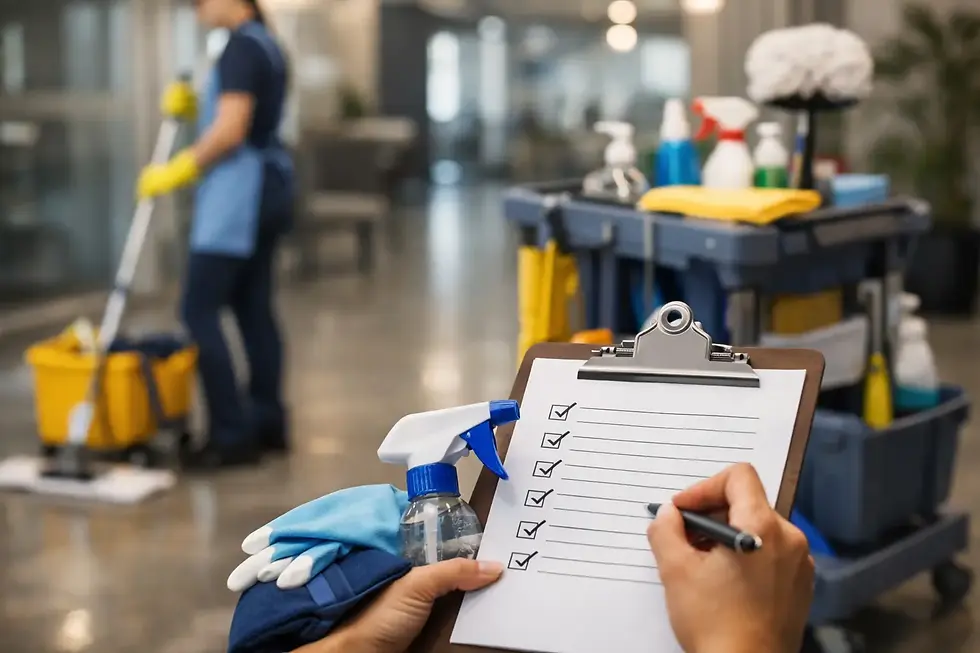
Paper checklists are easy to overlook, misplace, or complete without much detail. Mobile inspection tools are changing how commercial cleaning quality is tracked. Supervisors can document completed work, note concerns, assign follow-up tasks, and keep time-stamped records for specific areas of a facility.
For property managers and facility managers, this creates a clearer line of communication. If a tenant reports an issue in a lobby or restroom, the cleaning provider can review service records, address the concern, and adjust the scope if needed. That is more useful than relying on general assurances that a space was cleaned.
Digital reporting works best when it supports responsive management rather than creating extra paperwork. A good cleaning partner should use it to improve consistency, not to bury clients in unnecessary reports. The right level of documentation depends on the property and the client’s operational needs.
Data is shaping schedules, not just reports
Cleaning has traditionally followed a fixed calendar: nightly service, weekly detail work, monthly floor care. Those schedules remain valuable, but building-use data can make them more precise. Occupancy patterns, foot traffic, supply use, and service history can help identify when attention is needed most.
A warehouse may need stronger cleaning around loading zones after peak deliveries. A medical office may need more frequent restroom and touchpoint service during patient hours. A corporate office with hybrid work schedules may have lightly used areas that need less frequent maintenance, while shared kitchens and conference rooms need more attention.
This does not mean every facility should reduce service. In many cases, the data shows that cleaning resources should be shifted, not cut. The goal is to put time and effort where they protect appearance, hygiene, and safety.
Where Automation Still Needs a Professional Team
Automation is best viewed as support equipment. It can improve repeatability, but commercial cleaning is full of situations that require judgment: selecting the right chemical for a surface, spotting a safety hazard, addressing a spill, responding to a customer concern, or restoring a neglected floor.
Trained cleaners also understand how areas affect a business. A clean entrance communicates professionalism. A well-maintained restroom supports employee and visitor confidence. Proper carpet care extends the life of a major facility investment. Post-construction cleaning requires attention to fine dust, adhesive residue, glass, fixtures, and safety conditions that no autonomous machine can manage alone.
Disinfecting is another area where automation can be misunderstood. Electrostatic sprayers and other application tools may help distribute approved products efficiently in appropriate settings. However, results depend on the product, dwell time, cleaning method, surface condition, and whether high-touch areas were physically cleaned first. No machine can make up for poor process control.
How to Evaluate New Cleaning Technology
Before investing in equipment or asking a cleaning provider to add automation, focus on the operational issue you want to improve. Technology should have a clear purpose, not simply add a modern-looking feature to the contract.
Consider these questions when evaluating a cleaning automation plan:
Does the facility have large, open areas where automated floor equipment can operate safely?
Will the technology improve cleaning quality, response time, documentation, or labor allocation?
Who will maintain the equipment, train staff, and handle service interruptions?
Can the provider still deliver detailed cleaning, specialty floor care, and responsive support when conditions change?
The answers may point toward a phased approach. A facility might start by using digital inspections for better quality control, then add smart supply monitoring in high-use restrooms, and later evaluate autonomous floor care for suitable areas. Testing one solution at a time makes it easier to measure whether it actually improves results.
The Best Trend Is More Reliable Service
For most commercial clients, the value of automation is simple: fewer missed details, better visibility, and a cleaner facility without added disruption. The equipment itself is secondary to the service plan behind it.
At Unique Shine, dependable commercial cleaning still starts with trained professionals, flexible scheduling, and clear accountability. Automation can strengthen those fundamentals when it fits the facility, but it should never come at the expense of personal attention or visible cleanliness.
As cleaning technology continues to change, choose solutions that make your building easier to manage and more comfortable to use. The best result is not a smarter machine on the floor. It is a facility that looks cared for every day.

Comments