

How to Choose a Janitorial Provider With Confidence
A missed trash can, streaked lobby glass, or restroom that runs out of supplies can change how employees, visitors, and tenants view your facility. The right cleaning partner protects more than appearances. Knowing how to choose a janitorial provider means finding a company that can deliver dependable results, communicate clearly, and respond when your building's needs change.
For Albany-area offices, medical facilities, retail spaces, schools, warehouses, and multi-tenant properties, the lowest quote is rarely the full story. A reliable provider should make facility maintenance easier to manage, not create another vendor problem for your team to chase.
Start With Your Facility's Actual Cleaning Needs
Before requesting estimates, define what needs to be cleaned, how often, and when the work can be completed. A small professional office may need routine evening service, while a high-traffic facility may require daytime porter support, frequent restroom attention, and regular disinfecting. A property with carpeted common areas, hard-surface floors, or extensive glass also needs a provider with specialized capabilities beyond basic nightly cleaning.
Walk your space with a practical eye. Consider employee work areas, entrances, break rooms, restrooms, conference rooms, stairwells, loading areas, and customer-facing spaces. Note recurring trouble spots such as salt and moisture near winter entrances, fingerprints on glass doors, floor scuffs, or trash buildup after busy shifts.
A clear scope helps you compare proposals fairly. It also prevents a common frustration: assuming a task is included when it was never listed in the service agreement. Your janitorial plan should identify routine tasks, periodic work, supply responsibilities, and any areas that require special attention.
Separate Routine Cleaning From Periodic Services
Daily or weekly janitorial service keeps a facility presentable, but it does not replace deep cleaning. Carpet extraction, floor stripping and waxing, interior window cleaning, post-construction cleanup, and detailed disinfecting often need separate scheduling. Ask whether the provider can handle these services directly or whether they rely on outside vendors.
There is a real advantage to working with one qualified commercial cleaning partner for both recurring and specialty work. The provider already understands your facility, your building access procedures, and your expectations. Still, make sure specialized services are priced and scoped clearly rather than treated as vague add-ons.
How to Choose a Janitorial Provider You Can Trust
Trust in commercial cleaning comes from proof, not broad promises. Cleaning teams work in your building during off-hours, around valuable equipment, and in spaces that may contain confidential information. Confirm that each provider is properly insured and bonded, and ask what safeguards are in place for hiring, training, and supervision.
A professional provider should be able to explain how cleaners are screened, how new team members are trained, and who is responsible for inspecting work. If a company cannot give a direct answer about coverage, accountability, or staffing, that uncertainty can become your problem later.
Ask how the company handles key access, alarm systems, restricted areas, and incident reporting. A cleaning crew should follow your facility's procedures without requiring constant reminders. For healthcare, education, financial, manufacturing, or other controlled environments, ask whether the team can follow any additional site-specific protocols your operation requires.
Look for a Clear Quality-Control Process
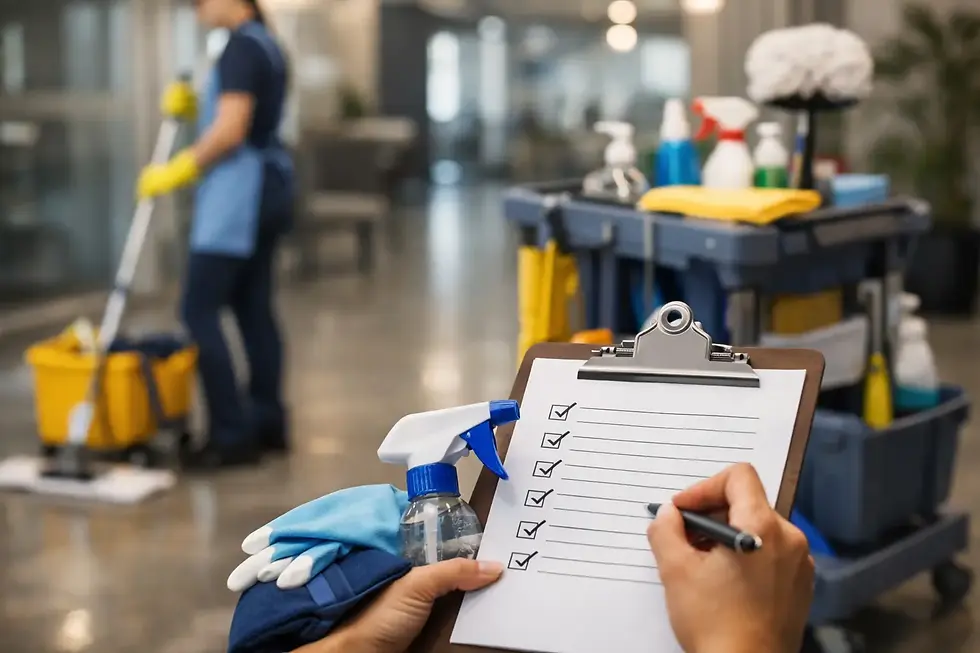
Cleaning quality should not depend on which crew happens to be assigned on a given night. Strong providers use checklists, supervisor inspections, client feedback, and follow-up procedures to keep standards consistent. You should know who to contact if something is missed and what happens after you report it.
Ask direct questions: How are inspections documented? How quickly are concerns addressed? Is there a dedicated account contact? Will the provider adjust the cleaning plan if your occupancy, hours, or facility layout changes?
The answers reveal whether the company is prepared to manage an ongoing relationship. A provider that welcomes feedback and has a defined correction process is more likely to protect your standards over time. Customer satisfaction should be supported by action, not used only as a slogan.
Compare Proposals Beyond the Monthly Price
A low monthly rate may look attractive until you discover it excludes floor care, consumables, quality inspections, or enough labor hours to complete the work properly. Compare proposals line by line. Confirm the cleaning frequency, tasks by area, labor coverage, equipment, products, and any charges for extra requests.
You should also ask whether the quote is based on a walkthrough. An estimate prepared without seeing the building can miss important details, including floor condition, restroom usage, access limitations, square footage, and the time required to service the space correctly. A site visit leads to a more realistic plan and fewer surprises.
Price matters, but value matters more. A provider that costs slightly more may save time and protect your image through better staffing, responsive communication, trained cleaners, and dependable follow-through. On the other hand, do not assume the highest price guarantees superior service. The best choice is a provider whose scope, staffing, and quality controls match the price being offered.
Understand the Contract Before You Commit
Read the service agreement carefully. Pay attention to the contract term, cancellation requirements, payment schedule, service exclusions, and process for changing the scope of work. You should also understand what constitutes an extra charge, especially for emergency calls, event cleanup, deep cleaning, or work outside normal service hours.
A flexible agreement can be valuable for businesses with changing occupancy or seasonal demands. However, flexibility should not mean unclear expectations. The contract should state exactly what your provider will do, when the work will occur, and how performance concerns will be addressed.
Evaluate Scheduling and Staffing Reliability
Cleaning must fit your operation. Many offices prefer after-hours service so employees can work without interruption. Retail sites, medical facilities, and high-traffic buildings may need daytime support as well. Discuss your preferred service window and ask how the provider manages call-outs, holidays, weather disruptions, and unexpected facility needs.
Coverage matters as much as the original schedule. If a regular cleaner is unavailable, does the company have trained backup staff? Will a supervisor verify that replacement staff understand the site? A provider with reliable staffing processes reduces the risk of skipped service and inconsistent results.
For facilities that operate outside traditional business hours, availability can be a deciding factor. A cleaning company that can respond to urgent spills, sanitation concerns, or last-minute events gives your team more confidence when conditions change quickly.
Ask About Products, Equipment, and Safety
The cleaning methods used in your facility affect appearance, indoor comfort, and the lifespan of your surfaces. Ask what products and equipment the provider uses, especially if you have sensitive flooring, high-touch areas, food-service spaces, or environmental preferences. The goal is not to demand a specific brand of product. It is to confirm that the provider understands how to clean each surface safely and effectively.
Floor care deserves particular attention. Improper products or aggressive equipment can dull finishes, damage carpet fibers, and shorten the life of expensive flooring. A qualified provider should assess the condition and material of your floors before recommending maintenance, deep cleaning, or strip-and-wax service.
Safety procedures should be equally clear. Confirm that cleaners are trained to use wet-floor signs, handle chemicals properly, secure equipment, and report hazards they identify. A good janitorial team does not just clean around problems. It helps your facility recognize issues before they become larger disruptions.
Check References and Start With Real Expectations
References and testimonials can show whether a provider has experience with facilities similar to yours. Ask about consistency, communication, responsiveness, and how the company handled a service issue. The most useful reference is not one that says everything was perfect. It is one that explains how the provider made things right when something needed attention.
If your facility has complex needs, consider beginning with a detailed walkthrough and a clearly defined initial service period. This gives both sides an opportunity to confirm the scope, refine priorities, and establish communication routines. Set measurable expectations from the beginning, such as restroom standards, floor appearance, trash removal, supply checks, and response times for concerns.
A clean facility should feel reliable to everyone who enters it. When you choose a provider with trained cleaners, insured and bonded operations, flexible scheduling, and a proven commitment to follow-through, you gain more than a cleaning crew. You gain a partner that helps your business stay ready for every workday, visitor, and unexpected need.
For businesses that need dependable commercial cleaning in Albany and nearby communities, Unique Shine can provide a clear, customized estimate built around your facility, schedule, and standards.


Comments