

Commercial Office Cleaning Guide for Managers
A client notices the fingerprints on the glass entry door before they see the conference room. Employees notice an overflowing restroom dispenser before they mention it to management. This commercial office cleaning guide helps Albany-area office and facility managers turn those small, visible details into a dependable cleaning plan that supports staff, visitors, and daily operations.
A clean office is not just a matter of appearance. It affects how comfortable people feel at work, how prepared your business looks to visitors, and how quickly minor maintenance concerns are identified. The goal is not to clean every surface with the same frequency. It is to match the work to the traffic, risks, and expectations of your facility.
Start With the Way Your Office Actually Operates
A useful cleaning plan begins with a walkthrough, not a generic checklist. A quiet accounting office with 12 employees needs a different schedule than a busy medical-adjacent office, call center, leasing office, or shared professional suite. Consider who enters the building, which spaces they use, and when cleaning can happen without interrupting work.
Start by identifying high-touch and high-traffic areas. Entry doors, reception counters, break rooms, restrooms, elevator buttons, shared printers, conference rooms, and common hallways generally need more attention than private offices. Then consider the finishes in each space. Carpet, luxury vinyl tile, natural stone, glass partitions, and upholstered seating all require different products and methods.
It also helps to account for seasonal conditions in Albany. Winter snow, salt, sand, and wet footwear can quickly damage floors and make an otherwise clean lobby look neglected. During allergy season, dust on vents, ledges, and blinds can become more noticeable. A cleaning program should adjust to the conditions your building faces rather than stay fixed all year.
Build a Commercial Office Cleaning Guide by Frequency
The most reliable programs divide responsibilities by frequency. This prevents daily cleaning from becoming rushed while making sure periodic tasks, such as carpet extraction or floor refinishing, are not forgotten until there is visible damage.
Daily and Per-Visit Tasks
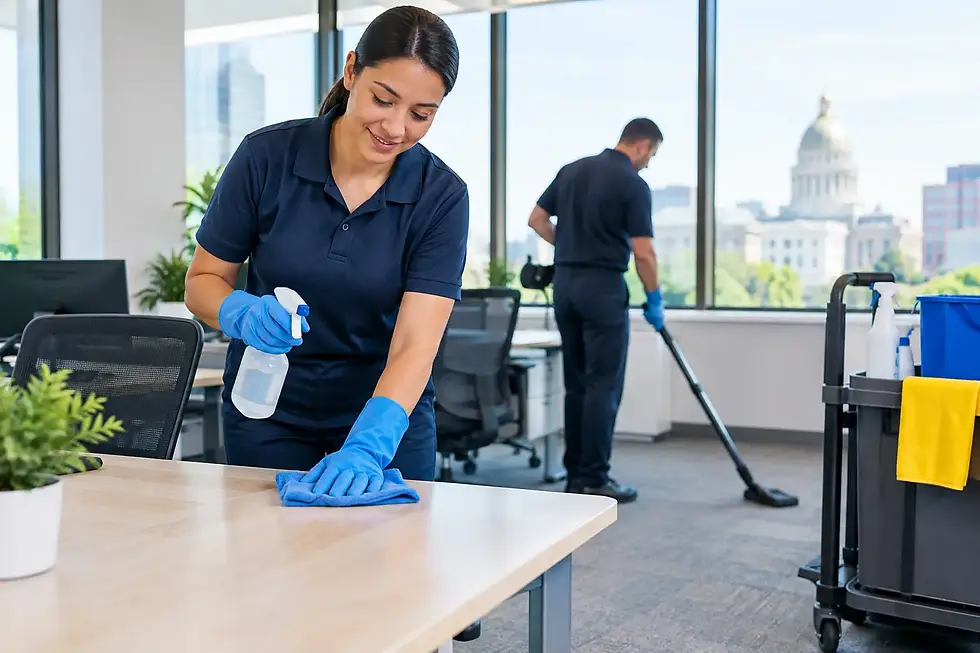
Daily work should focus on cleanliness that employees and visitors see or touch. For many offices, that includes removing trash, replacing liners, cleaning and disinfecting restrooms, restocking soap and paper products, wiping break room counters, cleaning sinks, vacuuming or spot-cleaning floors, and tidying the reception area.
High-touch points deserve special attention. Disinfecting is most useful when it is targeted to shared surfaces such as door handles, light switches, refrigerator handles, faucet controls, conference tables, and common equipment. A professional cleaner should use products according to their label directions, including the required contact time. Spraying a surface and immediately wiping it dry may not deliver the intended disinfecting result.
Weekly Tasks
Weekly tasks address buildup that is easy to miss during a nightly service. This may include dusting horizontal surfaces, detailed vacuuming around furniture edges, cleaning interior glass, wiping down chair arms, removing smudges from walls and doors, and cleaning break room appliances inside and out as agreed.
Conference rooms benefit from a weekly detail even if they are cleaned after each use. Dust, fingerprints, dry-erase residue, and crumbs collect in ways that are especially noticeable when a client sits down at the table.
Monthly and Periodic Tasks
Monthly, quarterly, and annual services protect the larger investment in your facility. The right timing depends on occupancy, weather, and floor type, but the scope often includes detailed baseboard cleaning, high dusting, vent cleaning, carpet spot treatment or extraction, window cleaning, upholstery care, and machine scrubbing of hard floors.
Some work should be scheduled based on condition rather than a calendar. A high-traffic lobby may need carpet cleaning more often than private offices. Likewise, a hard floor may need strip-and-wax service when its finish is worn, dull, or difficult to keep clean, not simply because a set number of months has passed.
Set Clear Standards Before Service Begins
Cleaning quality becomes inconsistent when expectations exist only in someone’s head. A written scope of work gives your team and your cleaning provider a shared definition of what “clean” means. It should identify the areas included, service days and times, tasks by frequency, consumables to be replenished, and any spaces that require special access or handling.
Be specific about priorities. If your lobby and restrooms must look perfect by 8 a.m., say so. If executive offices are private and should only be serviced on request, document that too. Clear instructions protect confidentiality, reduce missed tasks, and make inspections more useful.
A strong scope also leaves room for exceptions. A large meeting, flu-related absence, office move, renovation, or water leak can change cleaning needs quickly. Your provider should have a clear process for reporting issues and handling additional service without confusion over what is included in routine janitorial work.
Protect Floors, Carpets, and High-Value Surfaces
Floors carry most of the visible wear in an office, and they are often the most expensive surfaces to replace. Routine vacuuming, mopping, and entry mat care are essential, but they are only part of the plan. The wrong cleaner, too much water, or abrasive tools can shorten the life of carpet and floor finishes.
Entry mats are a simple example. They capture debris before it travels across the building, but only if they are vacuumed, cleaned, and replaced when worn. During wet weather, additional mat coverage and more frequent floor checks may be necessary to reduce slip hazards and protect finishes.
For carpeted offices, address spills promptly and schedule professional extraction before soil becomes embedded. For vinyl composition tile and similar resilient floors, periodic machine scrubbing and finish maintenance can restore appearance and make daily cleaning easier. Glass, stainless steel, and polished surfaces should be cleaned with products that do not leave haze, streaks, or residue.
Choose a Cleaning Partner You Can Hold Accountable
Price matters, but the lowest quote can become expensive when work is missed, staff turnover is high, or your manager spends time chasing basic corrections. A commercial cleaning provider should be able to explain how it staffs accounts, trains cleaners, handles quality checks, secures keys or access codes, and responds when something needs attention.
Ask whether the company is insured and bonded, whether cleaners are trained for the work in your building, and whether there is a clear point of contact. For after-hours service, communication is especially important. You need confidence that your office will be secured when the work is complete and that urgent needs can be addressed without waiting days for a response.
A full-service provider can also simplify facility management. Rather than coordinating separate vendors for routine janitorial cleaning, carpet care, floor maintenance, window cleaning, disinfecting, deep cleaning, and post-construction cleanup, you can work with one accountable team as needs change. Unique Shine provides this kind of flexible commercial support for offices throughout Albany and surrounding areas.
Inspect Results Without Micromanaging
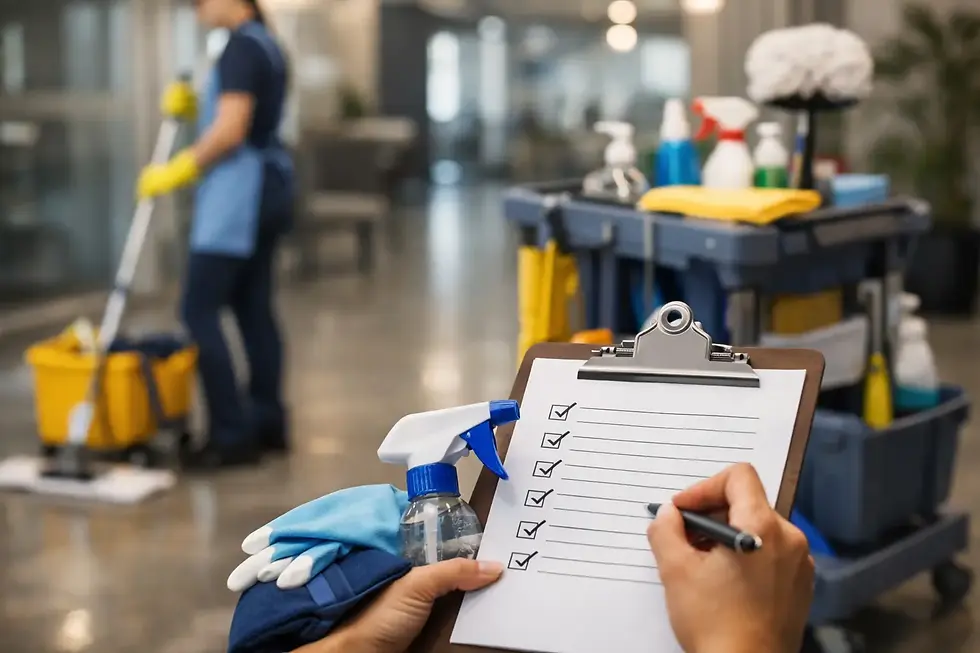
The best quality-control process is regular and practical. Walk the facility at different times, including first thing in the morning and after busy periods. Check the places people are most likely to notice: the entrance, reception area, restrooms, break room, conference rooms, and floors along main traffic paths.
When reporting an issue, be specific. “Restroom not clean” is difficult to act on. “Second-floor restroom has empty paper towel dispensers and residue around the sink faucets” gives the cleaning team a clear correction to make. Photos can help when appropriate, especially for recurring floor, window, or detail-cleaning concerns.
At the same time, look for patterns rather than judging service on one imperfect night. A missed task can happen. Repeated missed tasks, delayed communication, or a decline in detail work signal a process problem that should be addressed promptly.
Plan for the Work That Is Not Routine
Every office eventually needs more than regular trash removal and vacuuming. Moves, renovations, seasonal events, illness concerns, and unexpected spills can require deeper service. Discuss these possibilities before an urgent situation arises so you know who to call and what information they will need.
Post-construction cleaning, for example, often involves fine dust, adhesive residue, interior glass, fixtures, and floors that need careful attention before employees return. Deep cleaning may focus on neglected restrooms, break rooms, baseboards, high-touch surfaces, or carpets. The right approach depends on the condition of the space and the materials involved.
A dependable office cleaning program should make your building easier to manage, not add another task to your day. Set standards that reflect your workplace, review results regularly, and choose a team that responds when conditions change. When the cleaning plan is working, employees can focus on their jobs and visitors can focus on why they came through your door.

Comments