
Commercial Floor Cleaning Services That Last
A dull lobby floor, stained carpet tiles, or worn vinyl can change how customers and employees see your facility before anyone says a word. Commercial floor cleaning services address more than surface appearance. The right plan protects your flooring investment, supports a cleaner workplace, and keeps high-traffic areas ready for business.
For Albany-area offices, medical facilities, schools, retail spaces, warehouses, and multi-tenant properties, floor care needs to match the reality of the building. That means the right process, the right frequency, and a cleaning team that works around your operations instead of interrupting them.
Why commercial floor care deserves a dedicated plan
Floors absorb the hardest part of daily business activity. Foot traffic brings in salt, water, sand, oil, allergens, and fine grit. In Upstate New York, winter conditions can make that burden especially heavy. What looks like a minor amount of tracked-in debris can gradually scratch hard surfaces, wear away protective finishes, and leave carpets looking flat or discolored.
Routine mopping or vacuuming is necessary, but it is not always enough. A floor can appear clean while holding embedded soil, sticky residue, or buildup that makes it harder to maintain over time. Professional floor care is designed to remove that buildup before it affects appearance, traction, and material life.
A consistent plan also helps facility managers avoid the cycle of waiting until floors look bad, then scheduling an urgent restoration. Preventive care is usually more manageable, more predictable, and less disruptive than trying to correct years of wear at once.
Commercial floor cleaning services by flooring type
No two flooring materials should be cleaned the same way. Using excessive water on certain surfaces, harsh products on specialty finishes, or the wrong equipment on carpet can create damage instead of results. A professional provider should assess the material, its condition, its traffic level, and the facility's operating hours before recommending a scope of work.
Vinyl composition tile and resilient flooring
Vinyl composition tile, luxury vinyl tile, linoleum, and similar resilient floors are common in offices, schools, healthcare settings, and commercial corridors. Daily dust mopping and damp mopping help manage routine soil, but periodic machine scrubbing is often needed to remove residue that regular cleaning leaves behind.
When finish becomes worn, yellowed, or uneven, strip-and-wax service may be the appropriate next step. This process removes old finish, prepares the floor properly, and applies fresh coats of wax for a clean, even sheen. It is not something every floor needs on the same schedule. High-traffic entrances and hallways may need attention more frequently than low-use areas.
Carpet and carpet tile
Carpets trap soil that ordinary vacuuming cannot fully remove. Over time, that embedded dirt can dull the fibers, create traffic lanes, and contribute to odors. Commercial carpet cleaning may involve hot water extraction, low-moisture methods, spot treatment, or a combination based on the carpet type and how quickly the area must return to service.
The right method depends on the building. A busy office may prefer low-moisture cleaning for faster dry times, while a deep restorative cleaning may call for extraction. The goal is not simply to make carpet look better for one day. It is to remove the soil that wears fibers down and shortens the carpet's useful life.
Tile, grout, concrete, and specialty surfaces
Restrooms, break rooms, commercial kitchens, lobbies, and industrial spaces often have tile, grout, sealed concrete, or other specialty surfaces. These areas can collect grease, soap residue, spills, and deeply set dirt. Grout lines are especially vulnerable because their texture holds soil that a basic mop cannot reach.
Machine cleaning, targeted degreasing, and detail work can restore a more uniform appearance while helping reduce slippery buildup. In warehouses and production areas, the process may need to account for equipment movement, safety rules, and limited access windows.
The difference between routine cleaning and restoration
A reliable floor program has more than one level of service. Routine maintenance handles daily conditions. This may include vacuuming, spot cleaning, dust mopping, damp mopping, and entryway care. These tasks prevent loose soil from being ground into floors and keep the building presentable day to day.
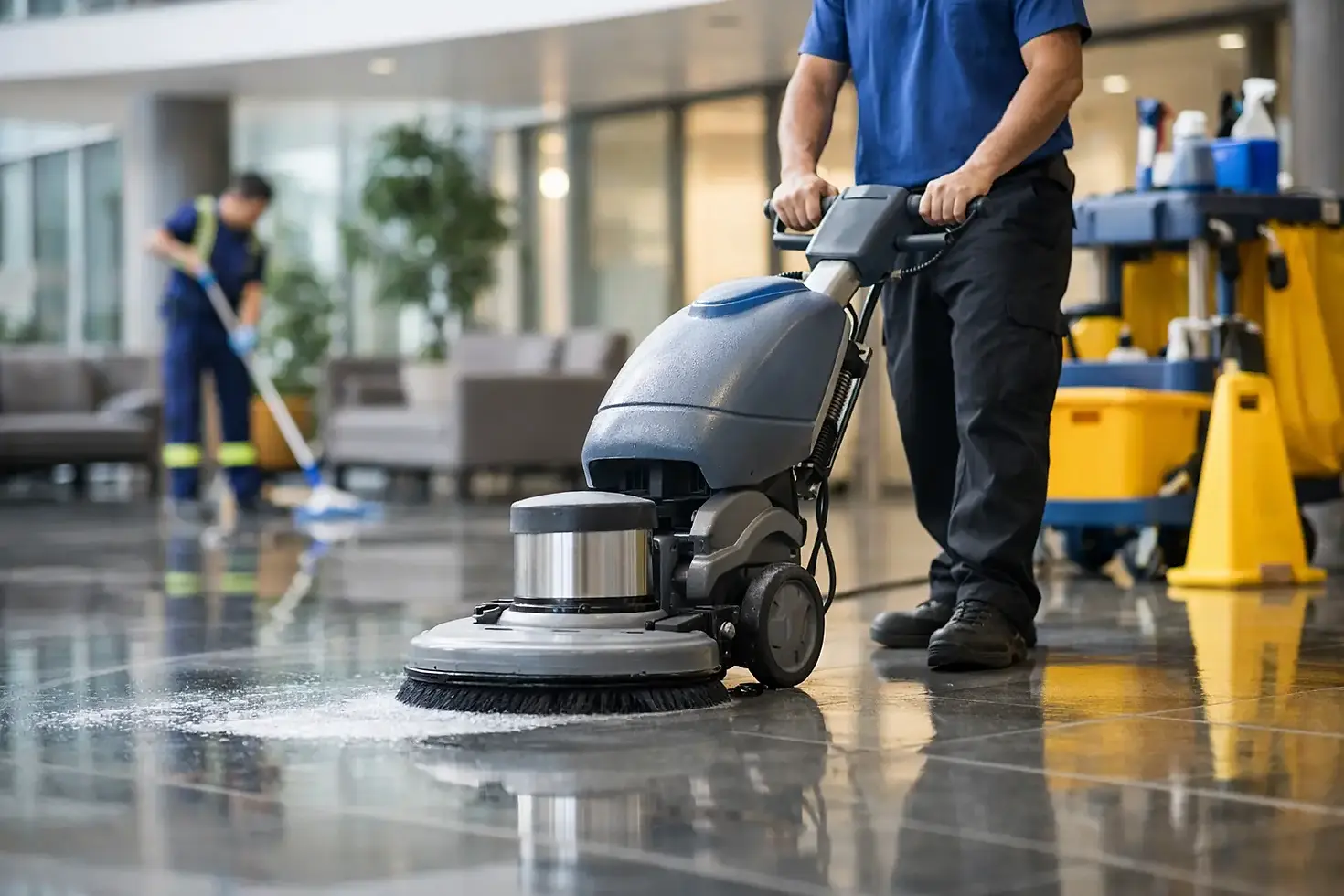
Periodic deep cleaning goes further. It may include carpet extraction, machine scrubbing, tile and grout cleaning, buffing, burnishing, or floor finish restoration. These services address buildup and wear that routine work cannot fully correct.
Then there is restorative work, such as stripping and waxing a neglected VCT floor or treating severe carpet traffic lanes. Restoration can make a major visual difference, but it can require more downtime and planning. The best result usually comes from using restoration when needed, then protecting that work with dependable maintenance.
How often should a commercial floor be cleaned?
The answer depends on foot traffic, the type of flooring, weather exposure, and the role the space plays in your business. A showroom entrance receives different treatment than a private office, and a healthcare waiting room has different sanitation expectations than a lightly used conference room.
High-traffic entrances often need daily attention, especially during wet or snowy months. Carpets in active office areas may benefit from professional cleaning several times a year, while lower-traffic zones may need it less often. Hard floors may require routine machine scrubbing and periodic finish care, with the timing based on visible wear and the floor's condition rather than a one-size-fits-all calendar.
A walkthrough is the practical starting point. It allows a cleaning partner to identify high-use zones, current issues, access requirements, and the services that will make the biggest difference. It also prevents paying for unnecessary work in areas that do not need the same level of care.
What to expect from a dependable floor cleaning provider
Commercial clients need more than a crew with cleaning equipment. They need accountability, clear communication, and work that can be scheduled around employees, tenants, patients, customers, or production activity.
Look for a provider that is trained, insured, and bonded, with experience working in active commercial facilities. The team should be able to explain the recommended process in plain language and set realistic expectations about dry times, odor, access restrictions, and any required preparation.
Scheduling flexibility matters as well. Floor stripping, waxing, and deep carpet cleaning are often best completed after hours or during low-traffic periods. A responsive provider can coordinate the work to limit downtime while still allowing sufficient time for floors to cure, dry, or be safely returned to use.
Quality control should not end when the crew leaves. Clear scopes of work, responsive follow-up, and a commitment to customer satisfaction help ensure that the service continues to meet your building's standards.
Protecting your floors between professional visits
The condition of a floor is shaped by what happens every day between deep cleanings. Entry mats should be clean, properly placed, and large enough to capture moisture and grit before it reaches interior flooring. Spills should be addressed promptly, particularly on hard surfaces where residue can become a slip concern or damage the finish.
Facility teams can also reduce premature wear by using products suited to the flooring material and avoiding overly aggressive pads or chemicals. A glossy floor is not automatically a clean or safe floor. The priority is a surface that is clean, well-maintained, and appropriate for the space.
For facilities with several floor types, a coordinated cleaning plan is especially valuable. Instead of managing separate vendors for carpet, hard floors, deep cleaning, and ongoing janitorial needs, one capable commercial cleaning partner can create a practical schedule across the building.
Floor care that works around your business
A clean floor supports the details that matter every day: a stronger first impression, safer walkways, more comfortable employees, and materials that last longer. Unique Shine provides commercial cleaning support for Albany businesses that need recurring maintenance, specialized floor care, and scheduling that respects how their facilities operate.
The best time to address floor wear is before it becomes the first thing visitors notice. A professional assessment can turn a reactive cleaning problem into a dependable maintenance plan built for the way your business actually runs.

Comments