

Cleaner Background Checks for Safer Workplaces
A cleaning crew may work when your employees, tenants, and customers are gone. They may have access to offices, restrooms, storage areas, keys, alarm codes, and expensive equipment. That is why cleaner background checks are not a minor hiring detail. For Albany-area facility managers and business owners, they are part of protecting the workplace, the people in it, and the reputation of the business.
A professional commercial cleaning provider should be ready to explain how it screens employees, how it supervises work, and how it responds if a concern arises. The right questions help you separate a dependable long-term partner from a vendor that simply sends available labor.
Why Cleaner Background Checks Matter
Commercial cleaning is built on trust. A crew can make a facility look better, support healthier daily operations, and help visitors form a strong first impression. But quality cleaning also requires access. Whether service happens nightly in an office, early in a medical facility, or between tenants in a property you manage, cleaners are often present during low-traffic hours.
Background screening helps a cleaning company make more informed hiring decisions before placing someone in a client facility. It can reduce avoidable risk, but it is not a promise that no incident can ever happen. Strong providers pair screening with training, documented procedures, active supervision, secure key and access practices, and clear client communication.
For clients, this matters because a cleaning issue can become a business interruption quickly. Missing supplies, an unsecured door, an alarm problem, or a crew member who does not follow site rules can create stress far beyond the cost of the service. Hiring a company that treats workforce screening seriously is a practical safeguard.
What a Professional Screening Process May Include
There is no single universal background check. The appropriate process depends on the job, the facility, the duties assigned, and applicable federal, state, and local requirements. Still, a professional cleaning contractor should have a consistent hiring process rather than making decisions casually or differently from one applicant to another.
Identity and work authorization verification
The process commonly starts by confirming an applicant's identity and authorization to work in the United States. Accurate identity information is essential because any additional screening is only useful when it is connected to the correct person.
Criminal history screening where appropriate
Many employers use criminal history checks as one part of the hiring review, particularly for positions involving access to client property after hours. A responsible approach considers the nature of any record, how long ago it occurred, its relevance to the role, and the requirements that apply where the person will work.
This is not about assuming that every past offense makes someone unsuitable for employment. It is about making fair, job-related decisions and placing employees appropriately. A provider should understand that blanket policies can be both unfair and legally risky.
Employment references and work history
Past work experience can reveal details that a record search cannot. Reference checks may help verify reliability, attendance, job performance, and whether an applicant can work independently. In commercial cleaning, dependability matters. A cleaner who arrives late, skips procedures, or leaves a site incomplete creates problems for both the contractor and the client.
Role-specific checks
Some assignments call for additional review. A cleaner who drives a company vehicle may require a motor vehicle record check. A team serving healthcare, education, government, or other regulated environments may need to meet site-specific credentialing or clearance requirements. The scope should match the work, not exceed it without a sound reason.
Questions to Ask a Commercial Cleaning Provider
You do not need to become an employment-law expert to evaluate a cleaning contractor. Ask direct questions before signing an agreement or handing over building access.
Start with: “Do you conduct background checks before assigning cleaners to client sites?” Then ask whether the company verifies identity, checks references, and uses role-specific screening when drivers or specialized facilities are involved.
It is also reasonable to ask who will be in your building. Will you have a consistent crew, or will workers rotate frequently? Who supervises the account? What happens when the regular cleaner is absent? A company with clear staffing practices is better positioned to maintain quality and accountability.
Ask about access control as well. Find out how keys, key cards, alarm codes, and entry instructions are handled. A well-run provider limits access to authorized employees, documents key handoffs, and has a defined process for returning property when an employee leaves.
Finally, confirm that the company is insured and bonded. Insurance and bonding do not replace thoughtful hiring, but they are meaningful signs that the provider takes its obligations seriously. Request proof and review it with the same care you would use for any contractor entering your facility.
Screening Is Only One Part of a Trusted Cleaning Team
Cleaner background checks matter, but they do not tell the full story. A company can run checks and still deliver inconsistent service if it lacks training, supervision, and quality control. The best results come from a complete operating system.
Training should cover more than how to vacuum or disinfect a surface. Cleaners need clear instructions on chemical safety, personal protective equipment, cross-contamination prevention, waste handling, restroom procedures, and site-specific security rules. They should know who to contact if they find a leak, damaged property, an unsecured entrance, or anything that looks out of place.
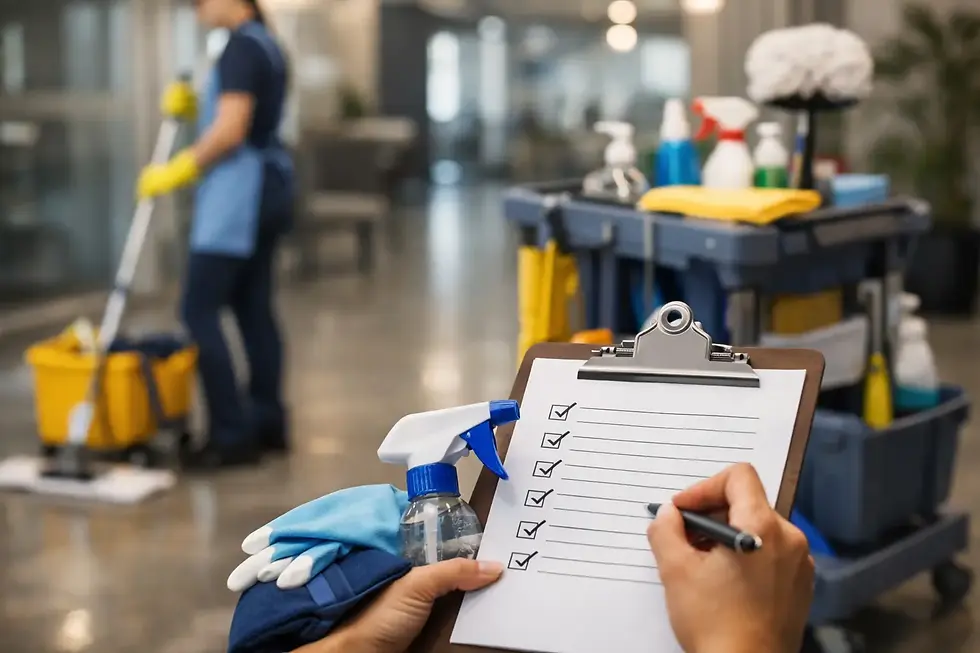
Supervision is equally important. Regular inspections, client check-ins, and documented cleaning checklists help catch small issues before they become ongoing frustrations. This is especially valuable for multi-tenant properties, healthcare-adjacent spaces, schools, retail locations, and offices with detailed cleaning requirements.
Consistency also builds trust. A familiar crew learns your facility layout, priority areas, sensitive equipment, and preferred schedule. There will be times when staffing changes are unavoidable, but a reliable provider has trained backup personnel and a handoff process that keeps the work on track.
Balance Security With Fair Hiring Practices
Facility leaders want confidence in the people entering their buildings. Cleaning companies also have a responsibility to hire fairly and comply with employment laws. Both goals can coexist.
When a provider uses third-party consumer reports for employment purposes, federal Fair Credit Reporting Act requirements may apply, including applicant disclosure, authorization, and specific steps if the company may take adverse action based on a report. State and local rules can add further requirements. New York employers must also consider applicable fair-chance and anti-discrimination laws.
For clients, the key takeaway is simple: look for a contractor with a documented, lawful process. A company should be able to describe its standards without sharing private employee information. You need evidence of professional practices, not access to a worker's personal records.
Build Security Into the Service Agreement
Your cleaning agreement should support the screening process with practical site rules. Define who can authorize additional work, who receives service updates, where cleaners may park, and which areas require restricted access. If your facility has badges, visitor logs, cameras, or alarm procedures, provide the instructions before the first shift.
Set expectations for incident reporting. If a cleaner notices a broken lock, water on the floor, damaged furniture, or a security concern, your provider should know exactly whom to call and how quickly to report it. Clear communication protects your building and prevents confusion after hours.
For high-security locations, consider starting with a walkthrough and a written scope that identifies sensitive areas. This can include server rooms, records storage, laboratories, medication areas, executive offices, or spaces with confidential paperwork. Cleaning teams can work effectively around these areas when expectations are clear from day one.
A clean facility should never require you to sacrifice peace of mind. Choose a commercial cleaning partner that treats screening, training, insurance, access control, and accountability as connected responsibilities. When those details are handled with care, your team can arrive each morning to a clean, secure, professionally maintained workplace and focus on the work that moves your business forward.

Comments