

8 Workplace Disinfectant Safety Rules That Work
A disinfectant can help reduce the spread of germs in a busy facility, but only when it is selected, handled, and applied correctly. Workplace disinfectant safety is not just a housekeeping detail. It affects employee well-being, indoor air quality, regulatory readiness, and the confidence visitors have in your business.
For office managers, property managers, and facility leaders, the goal is straightforward: maintain a clean, healthy environment without introducing avoidable chemical hazards. That requires more than placing spray bottles in supply closets. It requires a clear process that your employees, cleaning team, and vendors can follow every day.
Why Workplace Disinfectant Safety Deserves Attention
Disinfectants are designed to kill or inactivate certain germs on hard, nonporous surfaces. Because they are chemical products, they can also create risks when used incorrectly. Overapplication may leave residues on desks, counters, and touchpoints. Poor ventilation can make odors and vapors uncomfortable. Mixing products can create dangerous fumes. Improper storage can put chemicals within reach of people who have not been trained to use them.
The right approach also protects your property. Some disinfectants can damage finished wood, natural stone, electronics, floor coatings, fabrics, or painted surfaces. A product that works well in a restroom may not be appropriate for a conference table or a reception desk.
A dependable commercial cleaning plan balances sanitation with practical facility care. It considers the products being used, the surfaces being treated, the people occupying the space, and the schedule needed to complete the work without disrupting operations.
1. Use Products for Their Intended Purpose
Start with the product label. It identifies the surfaces a disinfectant can be used on, the organisms it is effective against, required personal protective equipment, dilution instructions, and the amount of time the surface must stay visibly wet. That last point matters more than many teams realize.
If a label requires a five-minute contact time, spraying a surface and immediately wiping it dry may not provide the claimed disinfection result. On the other hand, leaving a product on a surface longer than directed does not automatically make it safer or more effective. Follow the label exactly.
Use a product registered for disinfecting rather than assuming any general-purpose cleaner will do the same job. Cleaning removes dirt and debris. Disinfecting uses an approved product to reduce germs. In many situations, particularly on visibly soiled surfaces, cleaning needs to happen first so the disinfectant can work as intended.
2. Never Mix Cleaning Chemicals
One of the clearest workplace disinfectant safety rules is also one of the most critical: never mix cleaning products unless the manufacturer specifically directs you to do so.
Bleach combined with ammonia can produce hazardous gases. Bleach mixed with acids, including some toilet bowl cleaners and descalers, can also release harmful fumes. Even products that appear similar may have incompatible ingredients. Combining chemicals to create a stronger cleaner is not a professional shortcut. It is a preventable safety risk.
Keep products in their original labeled containers whenever possible. If a product must be transferred into a properly approved secondary container, label it immediately with the product name, dilution information, hazards, and handling directions. Unmarked spray bottles are a common source of mistakes, especially in multi-tenant buildings, large offices, and facilities with rotating staff.
3. Match the Product to the Surface and Setting
High-touch areas often deserve the most attention, including door handles, elevator buttons, light switches, shared workstations, breakroom counters, restroom fixtures, and reception surfaces. However, a high-touch surface does not automatically need the strongest available chemical.
Consider the material, the amount of traffic, and how people use the area. A delicate electronic device may need a manufacturer-approved wipe or carefully applied product rather than a heavy spray. Floor disinfectants should be compatible with the floor finish to help avoid dulling, residue buildup, or slip hazards. In food-service spaces, product directions for food-contact surfaces must be followed closely, including any required rinse step.
It also depends on the facility. A medical setting, daycare center, gym, warehouse, and standard office each have different use patterns and risk levels. A professional cleaning partner should adjust procedures to the environment instead of applying a one-size-fits-all checklist.
4. Protect Air Quality and Give Areas Time to Dry
Strong chemical odors are not proof that a space is cleaner. In fact, excessive spraying or poor ventilation can make a room unpleasant for employees and visitors, particularly those with asthma, allergies, migraines, or chemical sensitivities.
Use disinfectants in well-ventilated areas whenever the label calls for it. Open doors where appropriate, use existing ventilation systems, and schedule heavier work for lower-occupancy periods when possible. For facilities with 24-hour operations, divide the work into manageable zones so staff can clean thoroughly without affecting employees who need to remain in the space.
Allow treated surfaces to air dry when the product instructions require it. Avoid reopening a freshly disinfected restroom, breakroom, or meeting space before surfaces are dry and safe for normal use. Temporary signage can help prevent accidental contact and reduce slip risks on recently cleaned floors.
5. Train Every Person Who Handles Disinfectants
A written safety plan is valuable, but only if the people using the products understand it. Employees and cleaning professionals should know where to find Safety Data Sheets, how to read product labels, what protective equipment is required, and what to do if there is a spill or exposure.
Training should cover more than basic application. It should explain correct dilution, storage procedures, handwashing expectations, ventilation needs, and the difference between cleaning, sanitizing, and disinfecting. Refresher training is especially useful when you introduce a new product, expand services, change a facility layout, or bring on new team members.
Supervisors should also create a simple reporting process. If a worker develops irritation, notices a leaking container, or sees an unlabeled bottle, they should know who to tell and what immediate steps to take. Fast reporting prevents a small problem from turning into a larger disruption.
6. Store Chemicals Like Safety Equipment
Chemical storage areas should be clean, secure, dry, and organized. Keep disinfectants away from food, beverages, personal items, and direct heat sources. Store incompatible chemicals separately, and do not place heavy containers on high shelves where they could fall.
Inventory control helps prevent expired products, damaged containers, and unnecessary stockpiling. Buy enough product to support your service schedule, but avoid filling a closet with chemicals that may sit unused for long periods. Check containers routinely for leaks, damaged caps, faded labels, or crystallized residue.
For larger properties, a designated supply room with clear labeling is usually safer than keeping chemicals scattered across janitor closets, utility sinks, and office storage spaces. Consistency makes it easier for trained staff to find the right product and easier for managers to identify problems.
7. Use the Right Protective Equipment
Personal protective equipment should match the product and task. Depending on the label, that may mean gloves, eye protection, protective clothing, or other equipment. Gloves are not interchangeable with proper hand hygiene, and they should be changed when contaminated or damaged.
Train staff to remove gloves correctly and wash hands after cleaning tasks. Reusing disposable gloves or wearing them from a restroom into a breakroom can transfer contamination rather than control it. A careful workflow matters: clean from less soiled areas toward more soiled areas, use fresh cloths or wipes as needed, and avoid touching personal items while wearing gloves.
8. Build Safety Into Your Cleaning Schedule
Disinfecting should support routine cleaning, not replace it. A regular janitorial schedule keeps dust, soil, trash, and residue under control. Targeted disinfection can then focus on high-touch and higher-risk areas based on occupancy, season, illness concerns, and the way your facility operates.
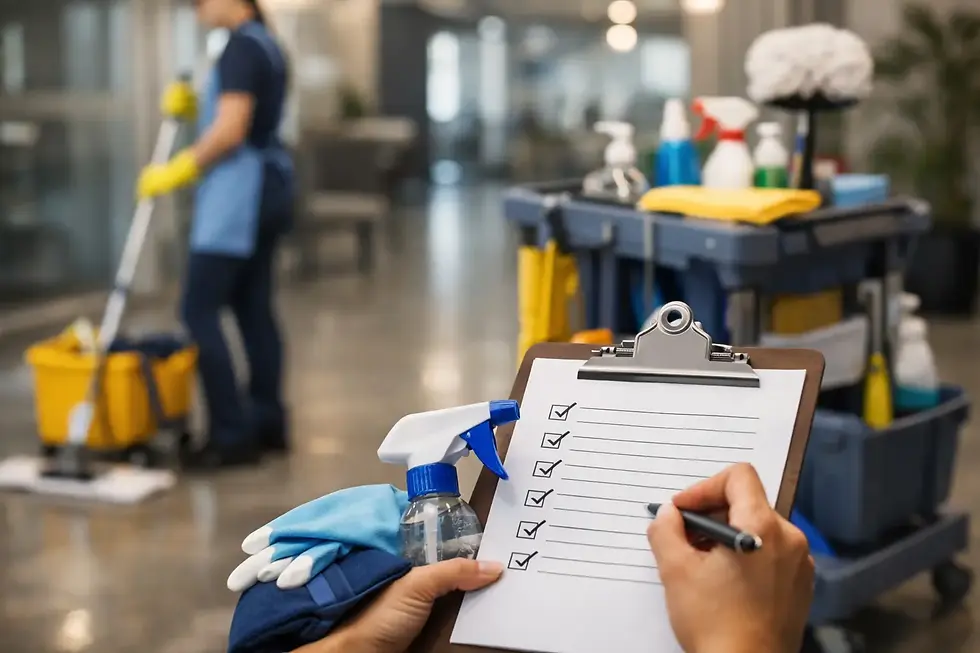
Documenting completed work provides accountability. A simple service log can show which areas were cleaned, which products were used, and whether any issues were found. This is especially helpful for property managers overseeing multiple locations or businesses that need clear communication between day and night shifts.
If your facility has experienced inconsistent results, frequent staff absences, or concerns about chemical use, it may be time to review the process with a trained commercial cleaning provider. Unique Shine helps Albany-area businesses build dependable cleaning programs that support safe disinfecting practices, flexible schedules, and visibly cleaner workplaces.
A safer facility starts with disciplined daily habits: use the right product, follow the label, protect the people doing the work, and never treat chemical safety as an afterthought.

Comments